12 Contemporary Architects Design 12 Cups & Saucers テーブルの上建築 12人の現代建築家がデザインした12のカップ&ソーサー
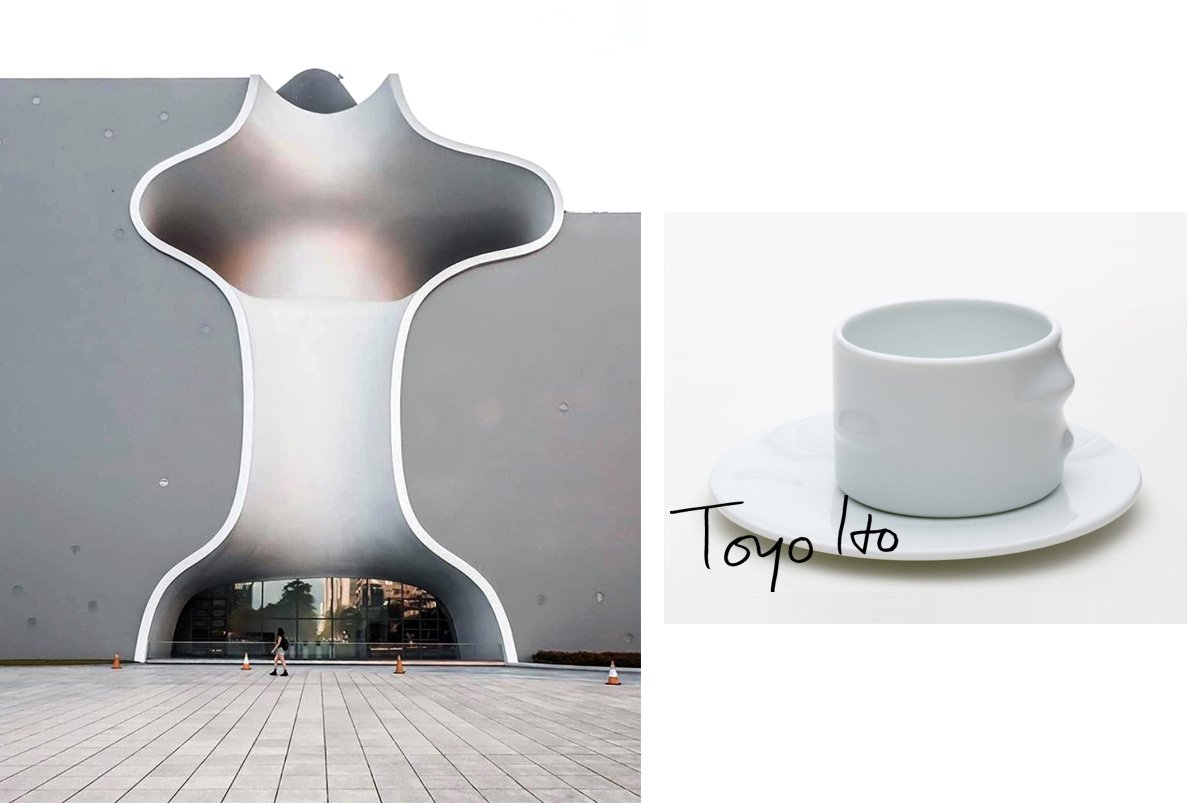
Left: National Taichung Theatre, Taiwan, 2006 - 16 - Toyo Ito Right: ‘Bo’, cup and saucer, porcelain, 2006-07 - Toyo Ito
"There’s a wonderful ambiguity in the power of a curve, the power of a line, whether it is defining an individual, a building, a bridge, a skyline, or a vessel. They are all part of the same family, in a way. The issues of quality, workmanship and textures are common to all these different scales" Norman Foster
From 2006 to 2007, twelve internationally acclaimed Japanese architects took part in the Minoyaki Project, Architecture Comes to the Table: 12 Contemporary Architects Designed 12 Cups & Saucers. The project invited architects to translate their spatial and material concerns into the intimate scale of functional ceramic objects, culminating in a publication documenting the outcomes.
This two-part post offers a brief examination of the book and selected ceramic pieces from the project, placing them in dialogue with key examples of the architects’ larger-scale architectural work.
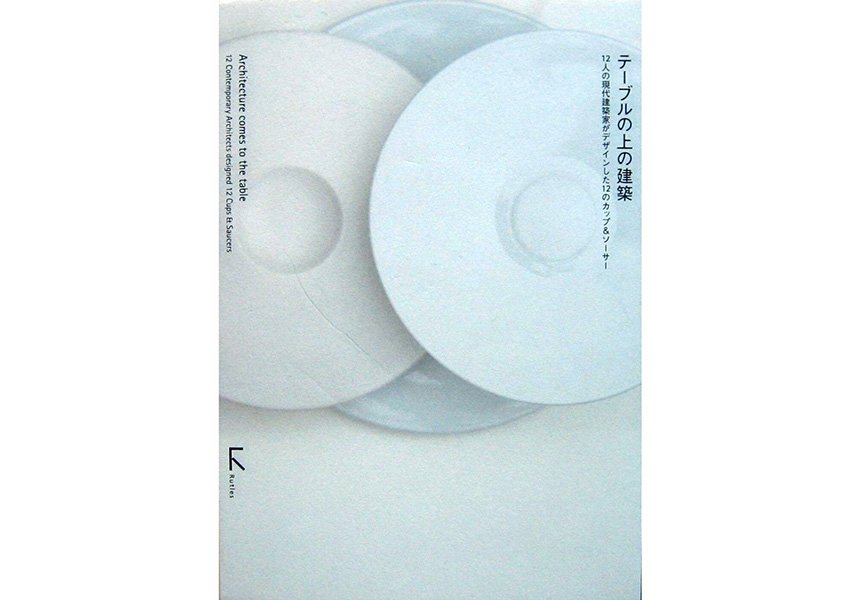
Publication: Architecture Comes to the Table, 12 Contemporary Architects designed 12 Cups & Saucers, 2007
ISBN: 978-4-89977-193-7
The Minoyaki Project is one of many projects carried out at the Oribe Design Centre in Gifu, Japan that has led to new expressions and cutting-edge creations in ceramic design. The Oribe Design Centre promotes and revitalises the local ceramic industries through innovative collaborations with both Japanese and international designers working across materials and disciplines.
Parts of Gifu prefecture in Japan have a long history of ceramic production, particularly the Mino district known for its Mino ware or Minoyaki. The oribe ceramics produced in this region from the 16th century was ahead of its time, characterised by a spirit of freedom and a willingness to challenge established norms. This very mindset embedded within the Oribe Design Centre cultivates opportunities for experimental design across both traditional and emerging fields, with the industries in Gifu.
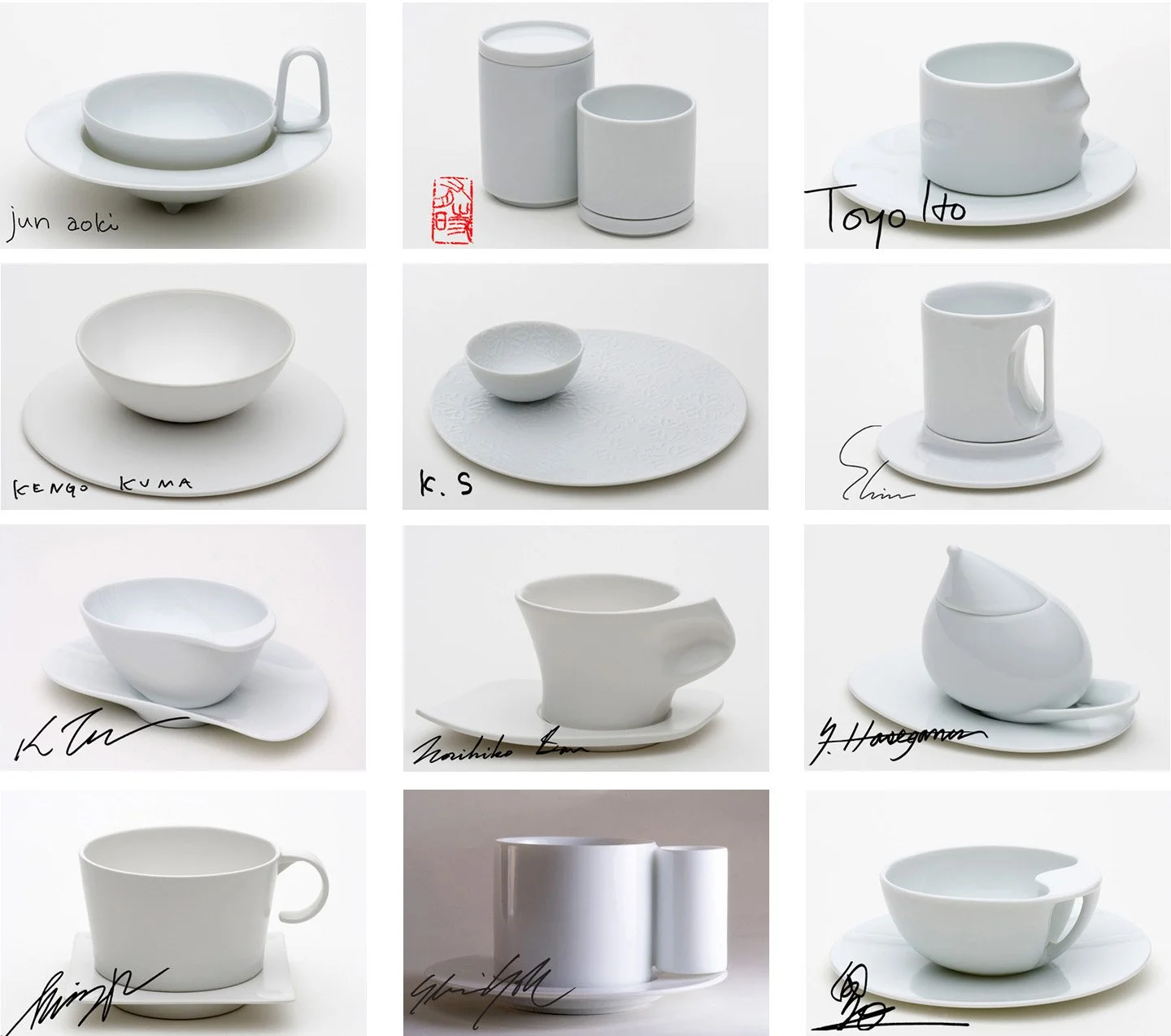
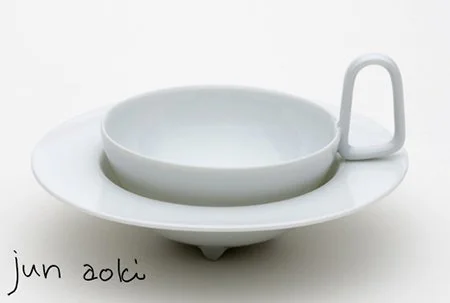
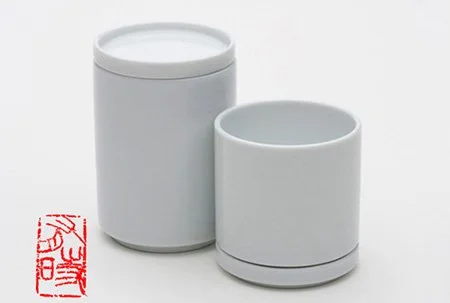
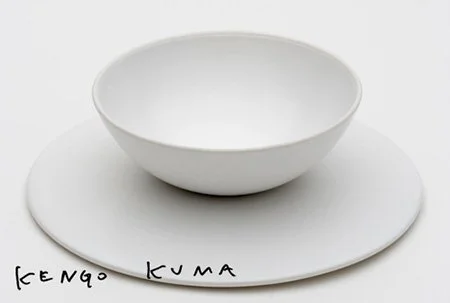
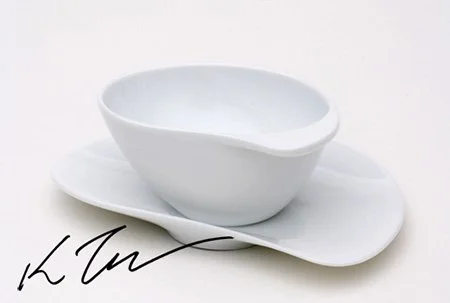
Top left to bottom right: ‘tea for two’ Jun Aoki / Arata Isozaki / ‘Bo’ Toyo Ito / ‘tsuki’ Kengo Kuma / ‘Pyonko’ Kazuyo Seijima / ‘ORIGIN’ Shin Takamatsu / ‘Win-Win’ Kiyoshi Sey Takeyama / ‘a pinched face cup’ Norihiko Dan / ‘ é ’ Itsugo Hasegawa / ‘Prototype No. 2’ Shigeru Ban / ‘PIPE & SAUCER’ Shoei Yoh / ‘Columbus Half’ Kijo Rokkaku
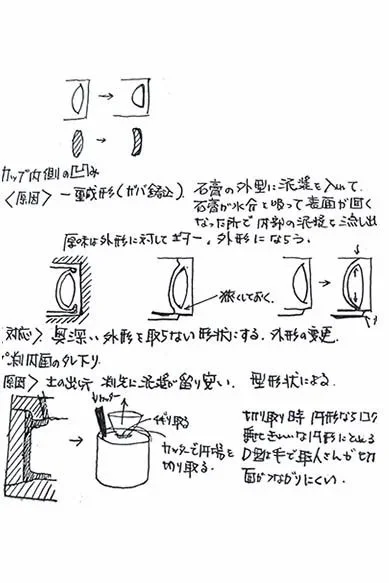
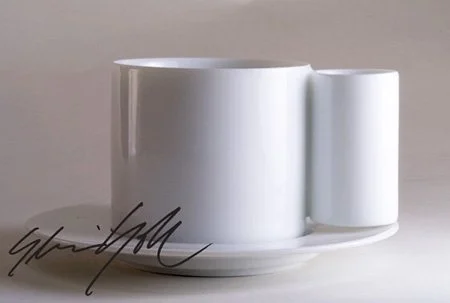
The focus of the book is on concept and design development, though some insight is given into the manufacturing process including model and mould making for porcelain slip casting. Each of the architect’s initial drawings and project concepts are shown alongside the finished products, offering insight into how their ideas are transformed into physical products. Shin Takamatsu’s Origin shows a cylindrical cup with a hollowed out space within its body which forms the handle. Alongside are further sketches showing how Takamatsu adapted the design for it to work as a slip cast object. Turning a design into a physical product requires numerous processes and tight timelines and the initial designs often need to be revised and adjusted.
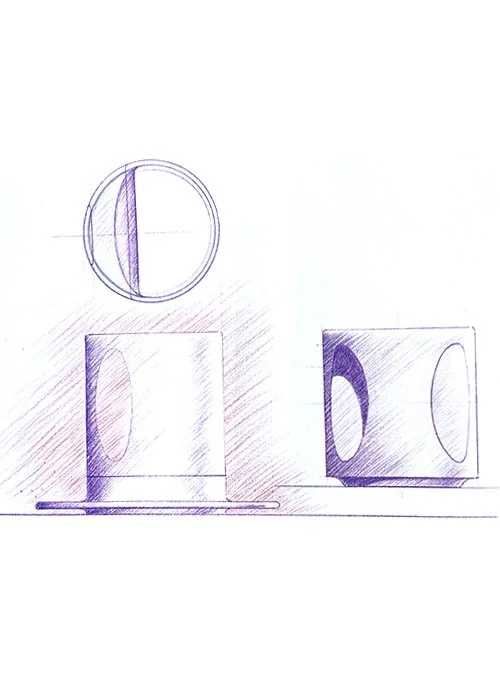
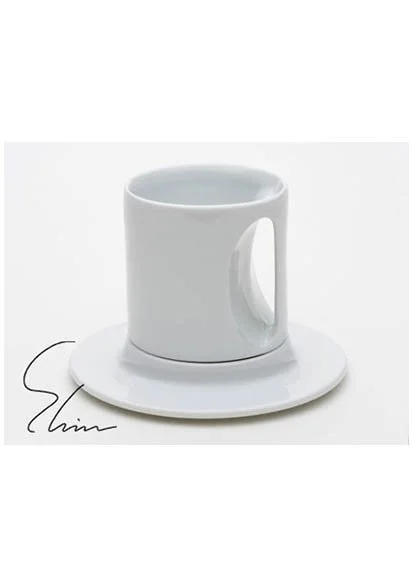
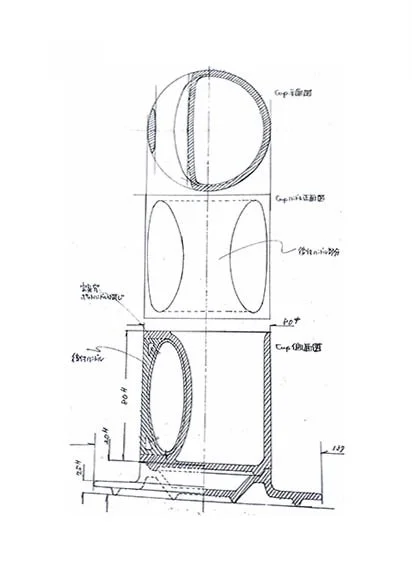
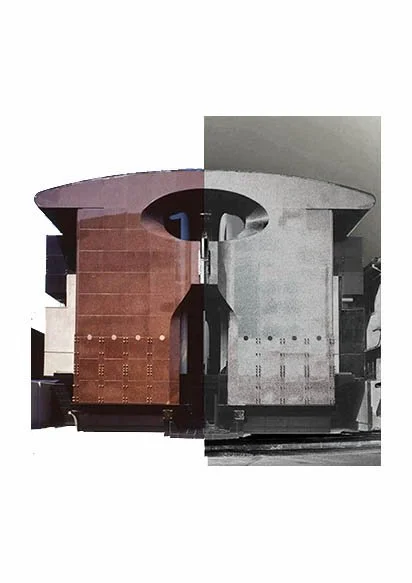
It is fascinating to observe how each architect’s distinct aesthetic language is translated into these small-scale functional objects, mirroring the principles evident in their larger architectural works. The presence of their spatial sensibilities and formal vocabulary at this intimate scale encourages a reconsideration of the cup and saucer as more than utilitarian objects. The dialogue between space, form, material and the body—fundamental to architectural thinking—is clearly articulated through both the architects’ drawings and the porcelain works documented in the book.

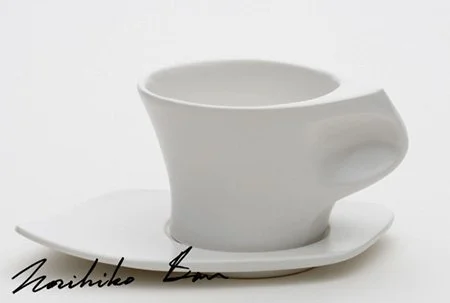
Left: a pinched face cup, cup & saucer, 2006-07 - Norihiko Dan Right: Sun Moon Lake Visitor Centre, Taiwan, 2003-13 - Norihiko Dan
The asymmetry that defines Norihiko Dan’s Pinched Face Cup (above) is also evident in his architectural spaces, such as the Sun Moon Lake Visitor Centre, completed in 2013. With this cup and saucer, Dan intentionally departed from the traditional expectation of symmetrical form.
As the cup & saucer title suggests, the handle of the cup appears to have been pinched and organically pulled outwards giving a sense of the malleability of the porcelain captured at a moment in time from manipulating the clay in its plastic state. These organic curves and extrusions alongside a sense of flow and movement are also echoed in the walls and spaces forming his large scale building projects.
While each cup and saucer demonstrates unique characteristics, they all share a considered relationship between functionality, physical engagement, and sensory perception.
Each architect approached the question of how the cup and saucer should be used and what their primary functions should be in a different way. Factors such as the thickness of the rim where it meets the lips, the shapes and profiles of the cup and saucer walls and their relationship to one another, and the way the cup is held were all influential in the design process.
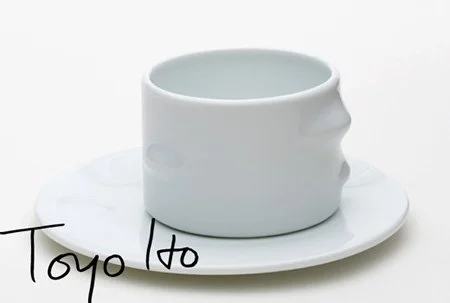
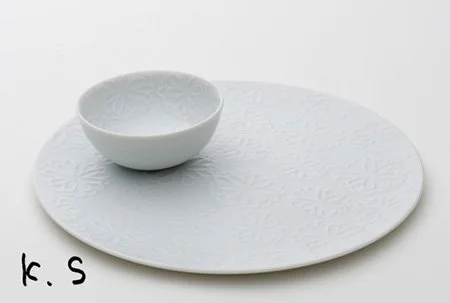
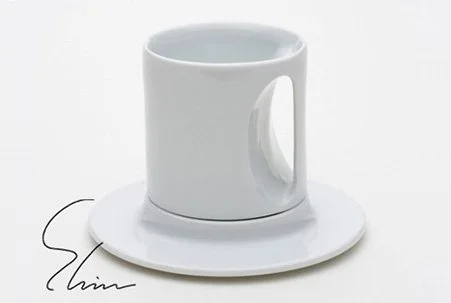

Toyo Ito said of his design (below), “My design arose from a desire to find new expression while utilising traditional features of Japanese tableware, such as, thickness, weight and sensation”.
Toyo Ito’s Bo cup evokes the human body, particularly the hand — with small, knuckle-like curves that extend outward to create natural resting points for the fingers when holding it. Ergonomic function and comfort are central to the design and also contribute to its soft visual aesthetic. Ito chose to create a cup with no handle, to enable it to be used for multiple purposes and to be held directly in the hand or with both hands to drink from.
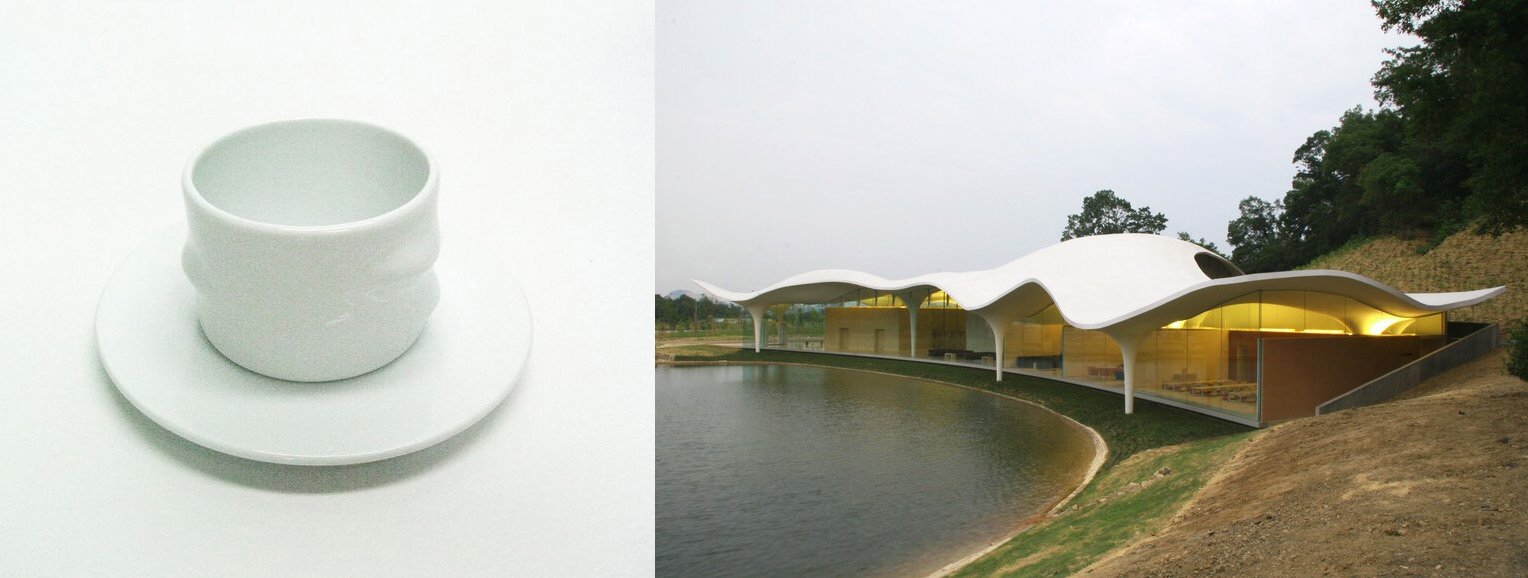
Left: ‘Bo’, cup and saucer, porcelain, 2006-07 - Toyo Ito Right: Meiso no Mori, Kakamigahara, Japan, 2004-2006 - Toyo Ito
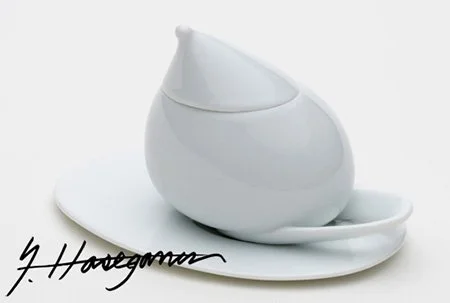
Inspired her love of the aromas of tea and coffee, Itsuko Hasekawa’s ‘é’ was developed with a lid to capture warmth and scent within the cup. Its soft bulbous form suggests organic movement and vitality, complemented by a wide, flat handle that emerges from the base like a leaf.
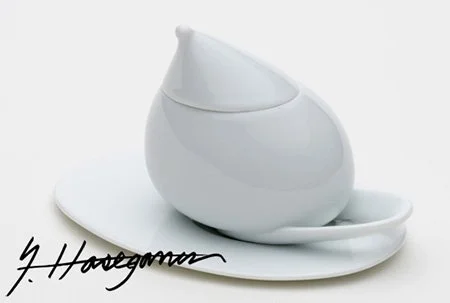
‘é’, Itsuku Hasegawa
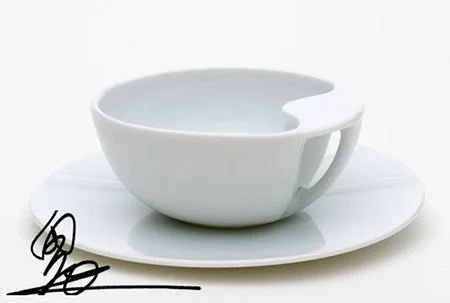
Sey Takeyama’s ‘Win-Win’ cup and saucer (below), a portion of the rim of the cup extends outward in a continuous gesture reflecting the fluid design of the saucer. This is another striking example of the way in which the architect’s signature approach to large scale work emerges within modest, functional forms.
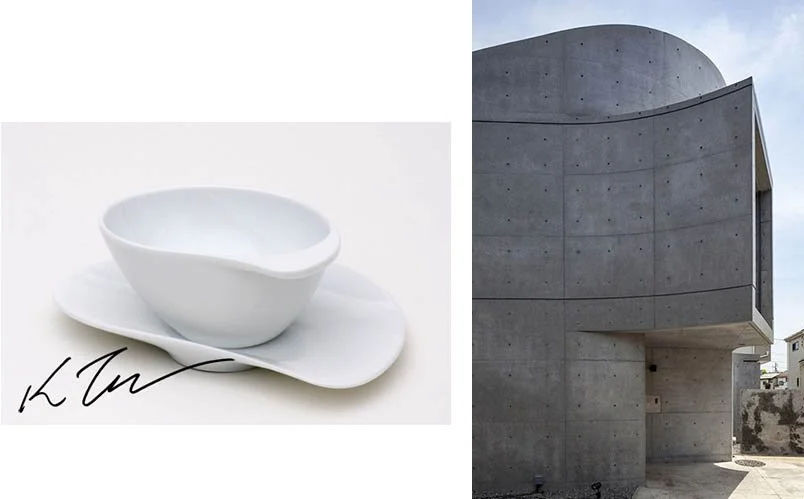
Left: ‘Win-Win’Kiyoshi Sey Takeyama Right: Gallery of House in Tachikawa, Tokyo, 2017, Kiyoshi Sey Takeyama + AMORPHE - 3
Shigeru Ban’s Prototype No.2 (below) was modified significantly from the original cup, which was designed with a dual purpose handle. The handle could be pulled out from the cup to be used as a teaspoon (see above image) and reinserted to be used as a handle again. This idea sprang from thoughts about the inconvenient aspects of a cup and saucer, one of the observations being about the single use of teaspoons and the awkwardness of keeping it on the saucer.
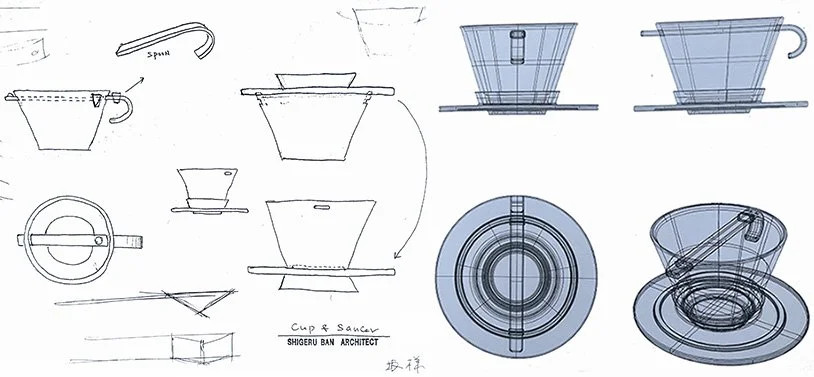
‘Initial design sketches and CAD drawings for ‘Prototype No.2’, with removable handle/teaspoon, Shigeru Ban
Due to time constraints, the original concept was adapted into a cup with a permanently fixed handle, distinguished by a rounded curve that allows the fingers to hook through comfortably while the hands cradle the vessel. The accompanying saucer incorporates a concealed compartment, discreetly housing a miniature teaspoon/stick along with space for milk and sugar, an efficient and thoughtful use of limited surface area.
Widely recognised for his pioneering use of sustainable and unconventional materials, including recycled cardboard tubes, Ban’s sensitivity to material and user interaction is also evident here. Subtle thumb-sized dimples at the corners of the saucer invite touch, intuitively guiding the act of lifting both cup and saucer.
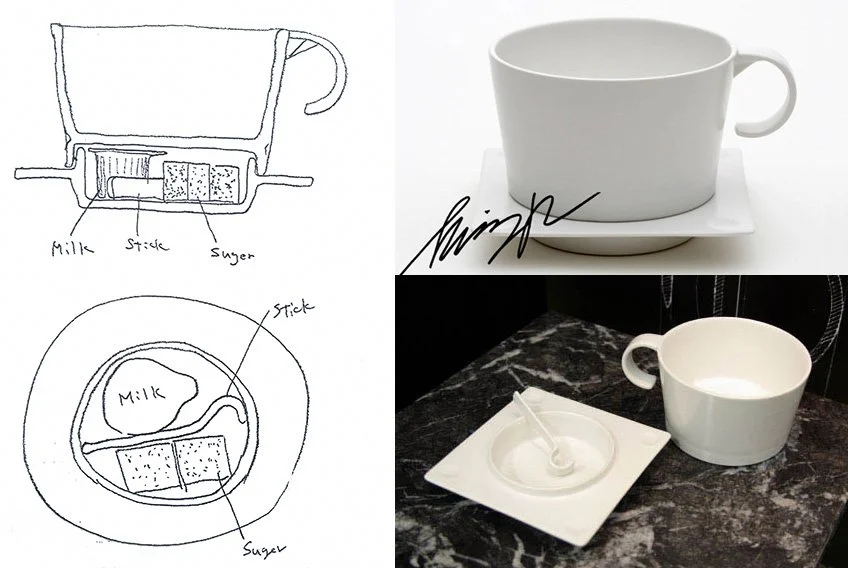
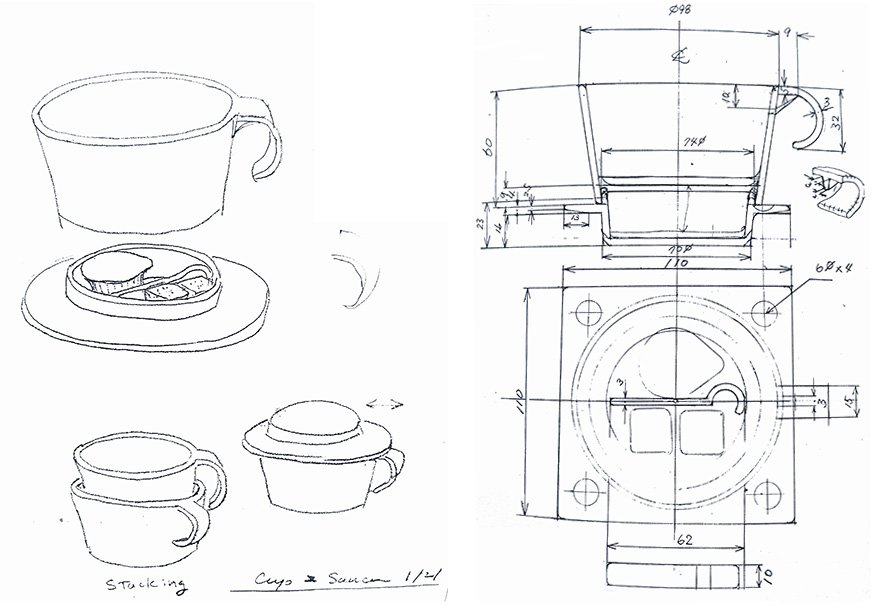
Design development sketches for ‘Prototype No.2’, with measurements, Shigeru Ban
The sketch above makes clear that storage was integral to the design, with the cups proportioned to stack compactly inside one another to maximise space efficiency. It also reveals the saucer’s additional functionality: alongside holding the cup and its accompaniments, it can be inverted and sit on top of the cup as a lid, keeping the drink warm like a small hat.
Continue reading in Part II (next post)