Connecting Ceramics, Architecture and Landscape
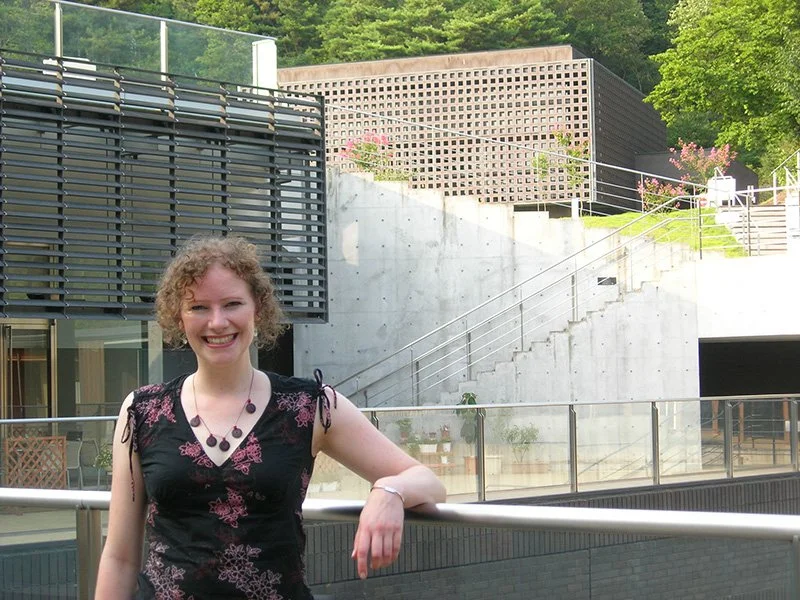
Standing at the top of the Museum’s water cascade wall next to the multi-colour stonework reflecting the local Mino clays.
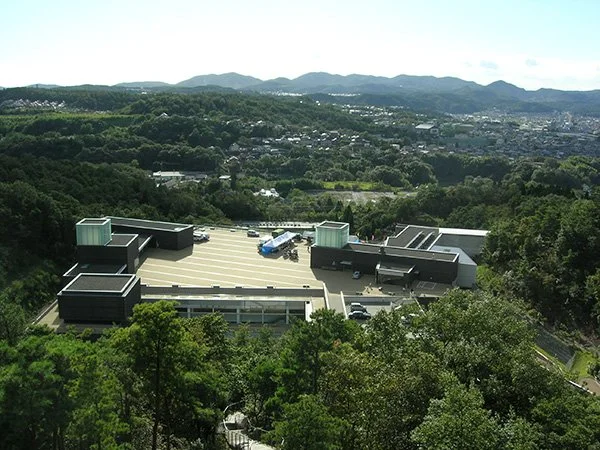
Ariel view of the Ceramics Park Mino, Tajimi, Gifu, Japan
Opened in 2002 and designed by Arata Isozaki, the Museum of Modern Ceramic Art at the Ceramics Park Mino is one of several museums in Gifu prefecture dedicated entirely to ceramics. The architecture of the site and its relationship to the landscape through its innovative design and integration of clay materials directly from the surrounding environment left a lasting impression on me since my very first visit in 2005. In this post, I’ll share photos and reflections on the architecture of this remarkable site and also one of the most prestigious international ceramic exhibitions held at the museum.
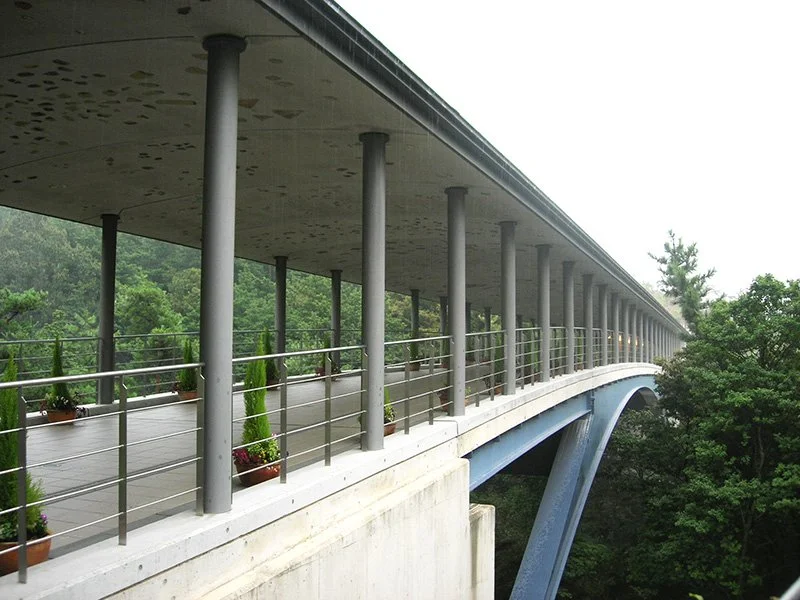
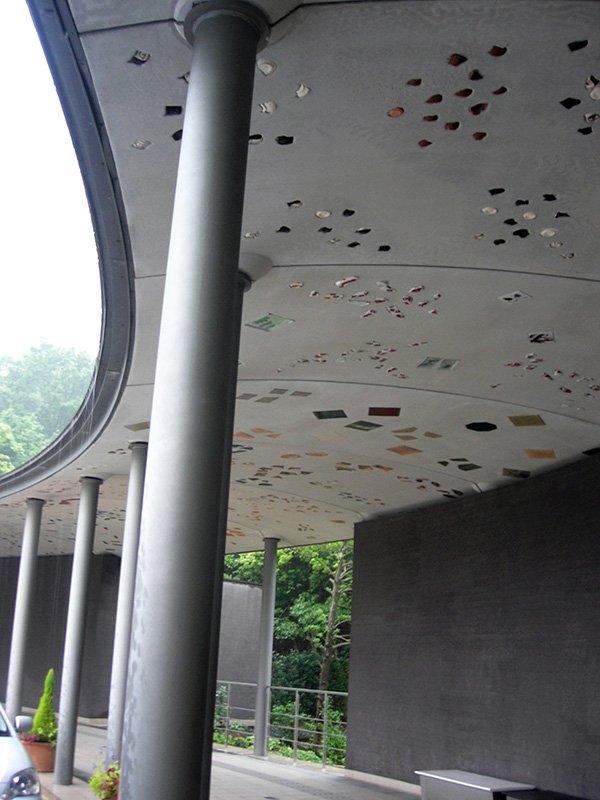
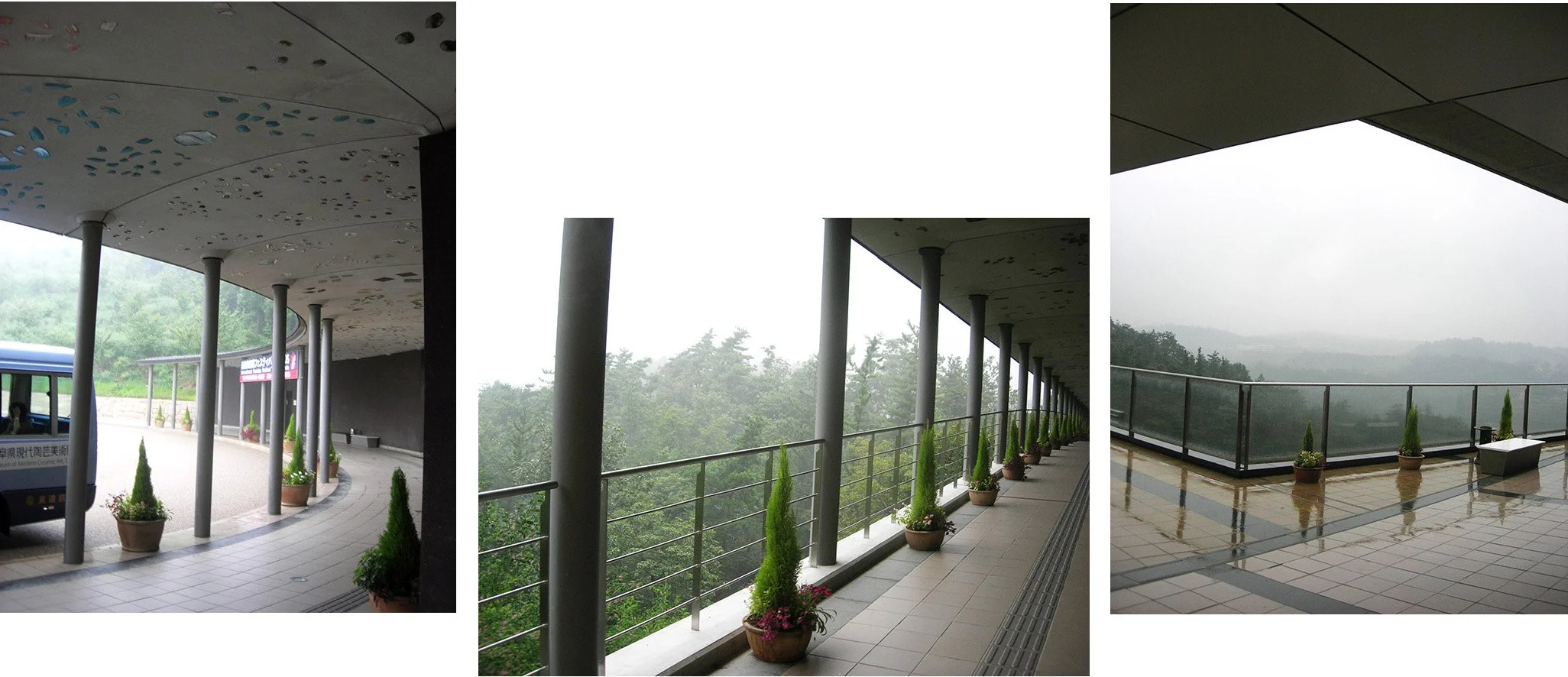
Entrance footbridge leading to the Museum of Modern Ceramics at the Ceramic Park Mino, Tajimi, Gifu The concrete used for the footbridge and tunnel that lead to the museum are embedded with fired ceramic fragments.
The Ceramics
Japan is arguably home to more ceramic museums than anywhere else in the world. Set in the side of a hill in Tajimi, Gifu, the Museum of Modern Ceramics emerges from the landscape and is characterised by its emphasis on its harmony with the surrounding natural environment.
Tajimi and its surrounding region form one of Japan’s most important ceramic hubs, celebrated for Mino ware, tea wares, and the rich surfaces of Oribe and Shino glazes as introduced in my previous post. In Japan, ceramics are inseparable from other cultural forms — from food to ikebana and the tea ceremony.
Ceramics Park Mino was established to present ceramic art that moves fluidly between tradition, experimental design, and contemporary discourse. The museum’s collection features work by leading Japanese and international artists and designers, encompassing both studio practice and industrial production. Rather than separating objects into categories of “art” and “craft,” the museum adopts a more integrated perspective — one that does not wholly align with conventional Western distinctions.
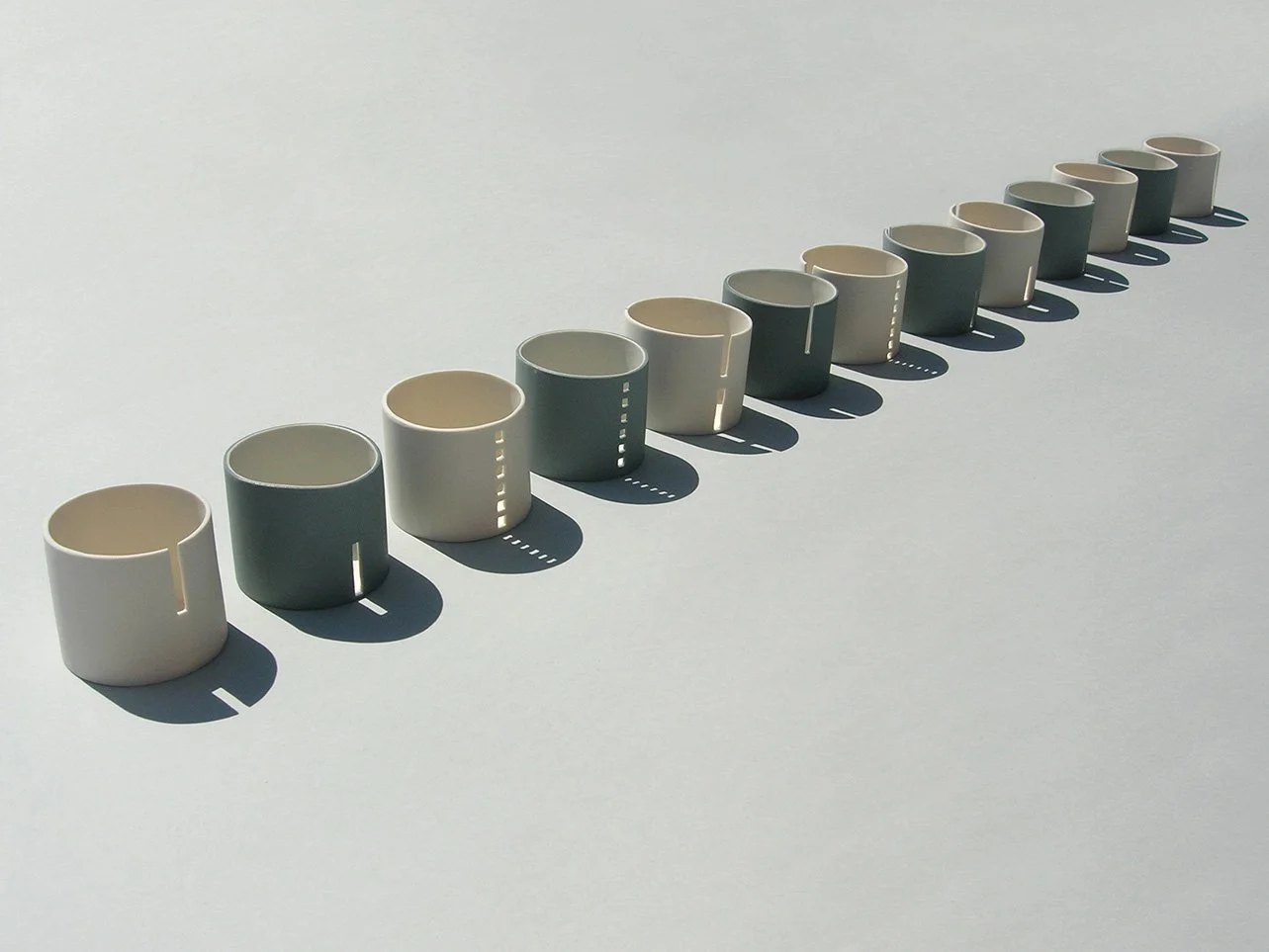
Exhibiting my work at this venue and being awarded the Special Judge’s Prize in the 8th International Ceramics Competition Mino, was a genuine honour. I was fortunate to exhibit alongside 190 other incredible sculptors and designers selected from a total of 3,284 submissions from 55 countries.
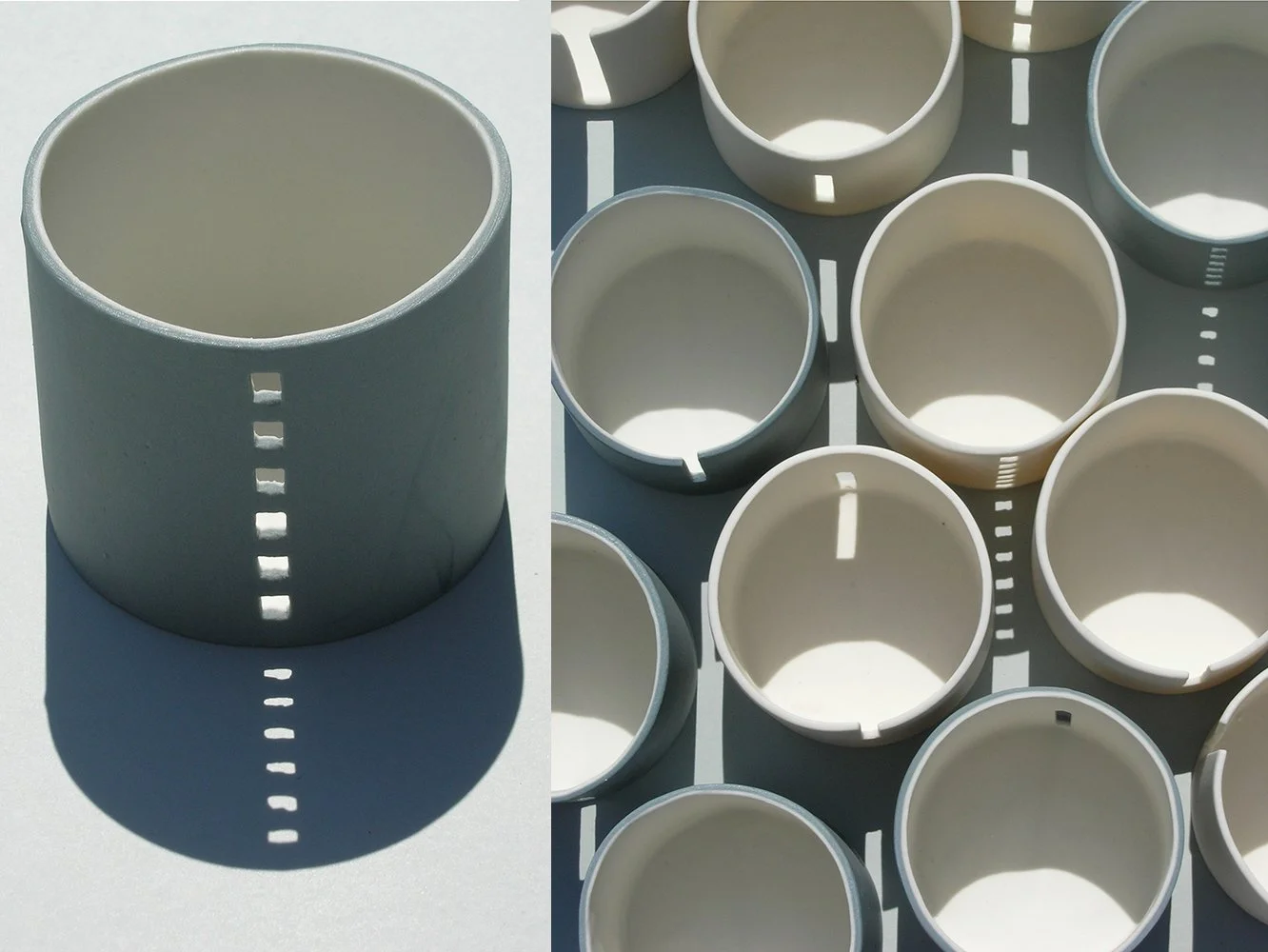
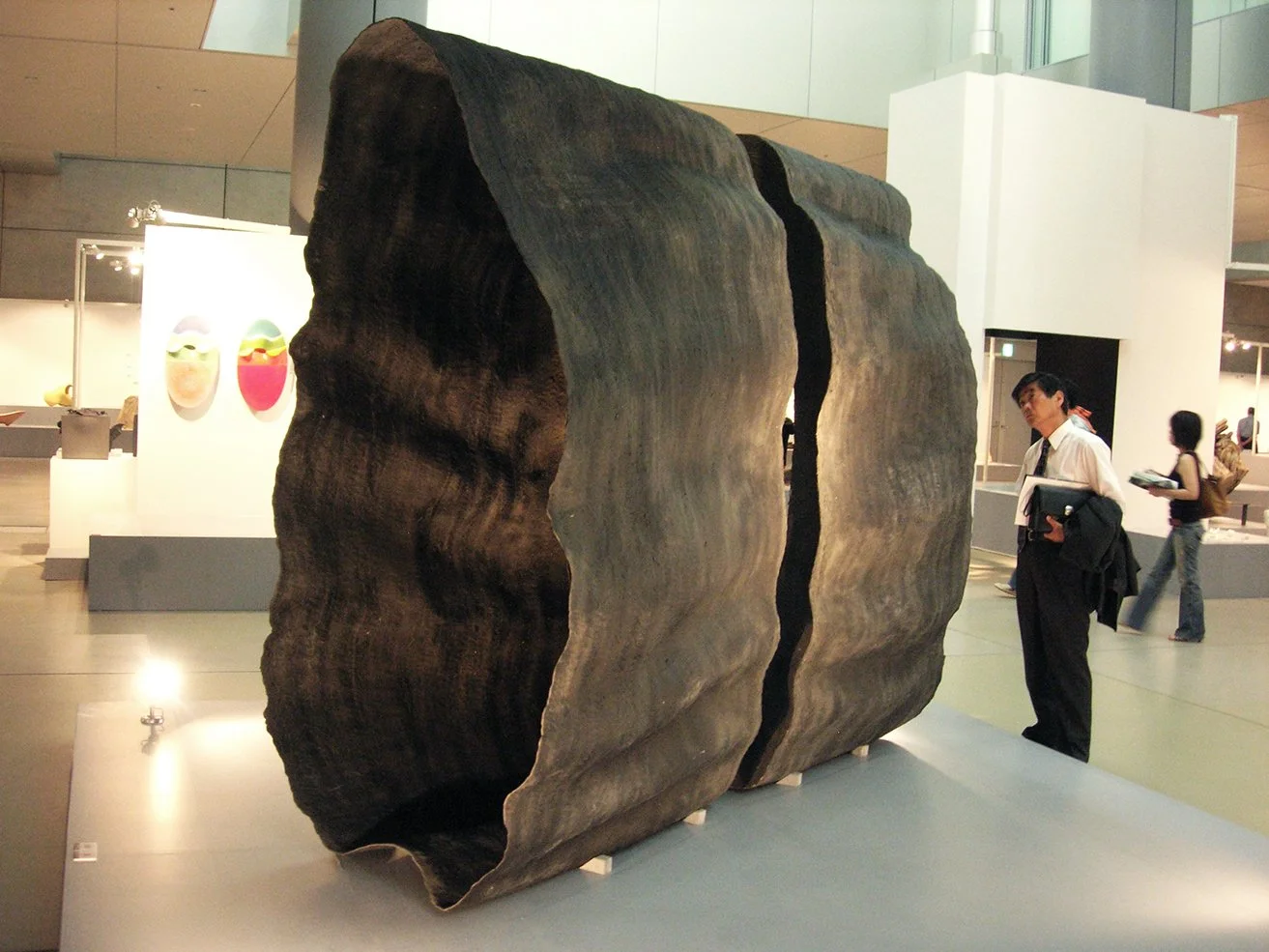
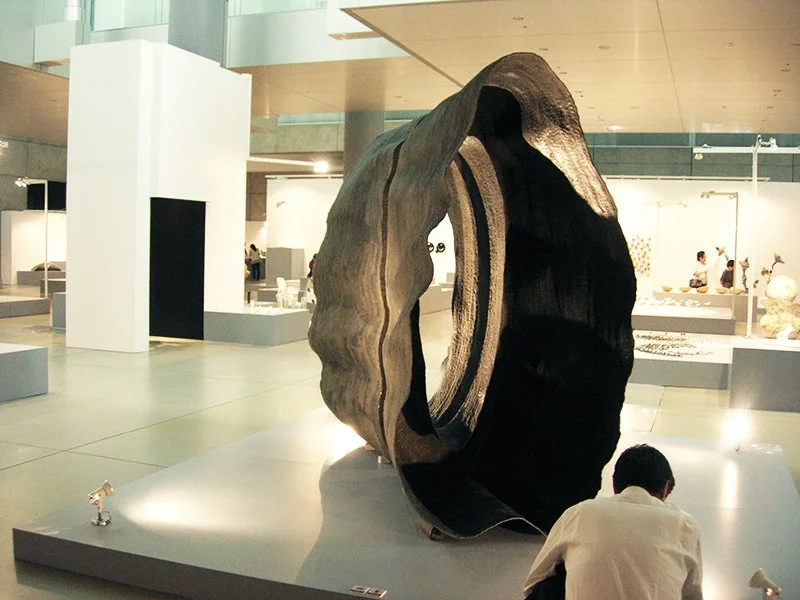
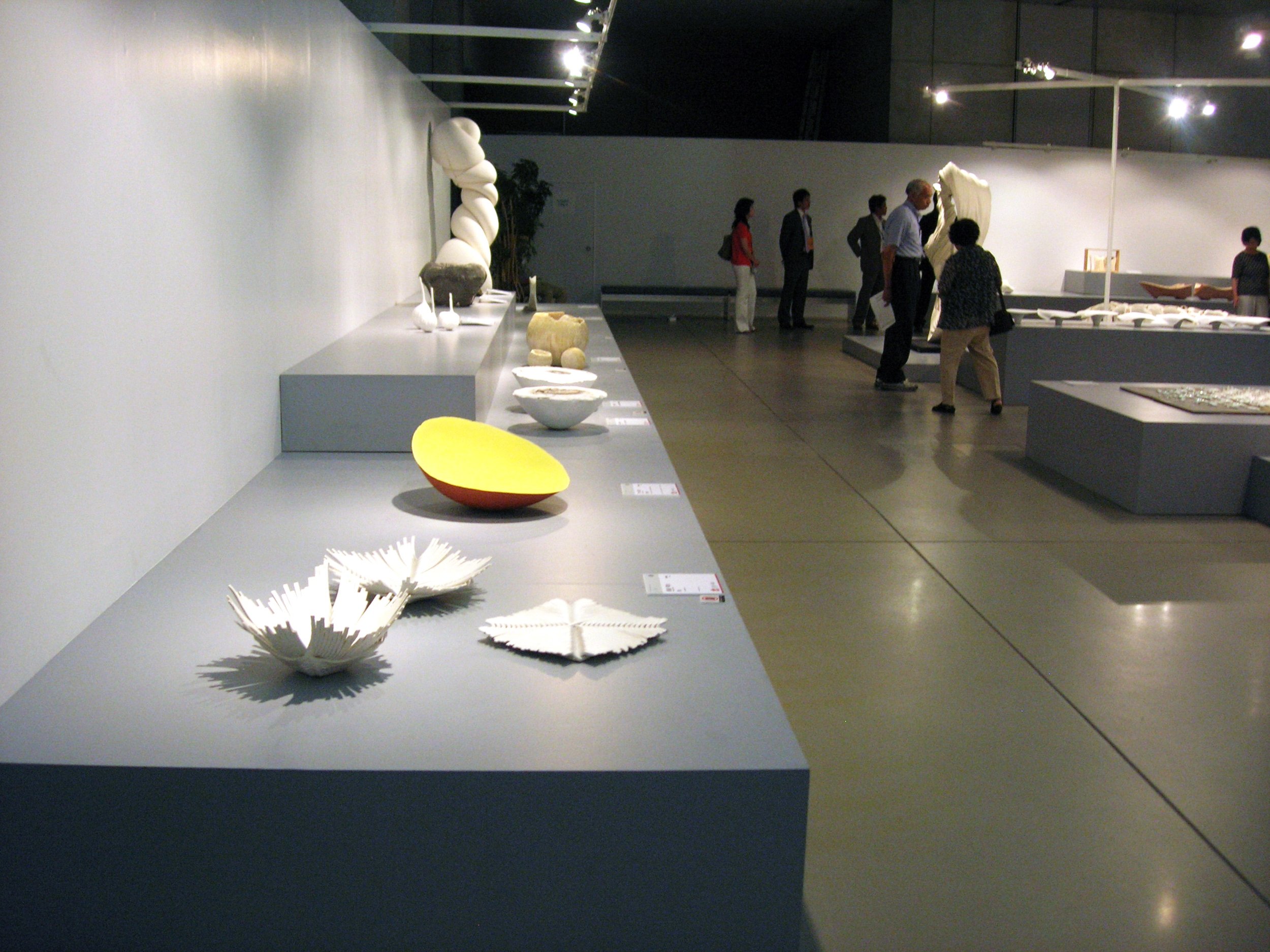
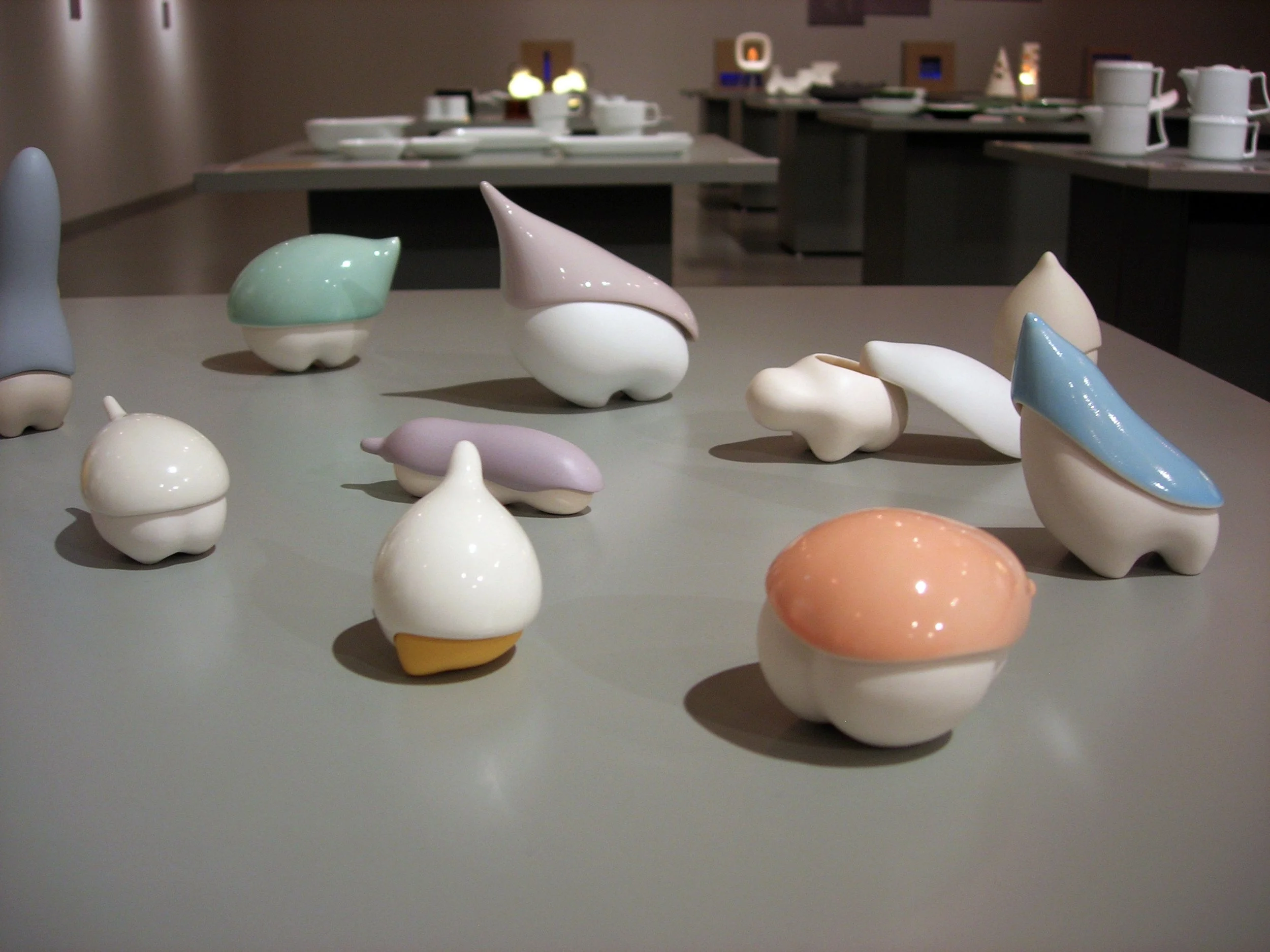
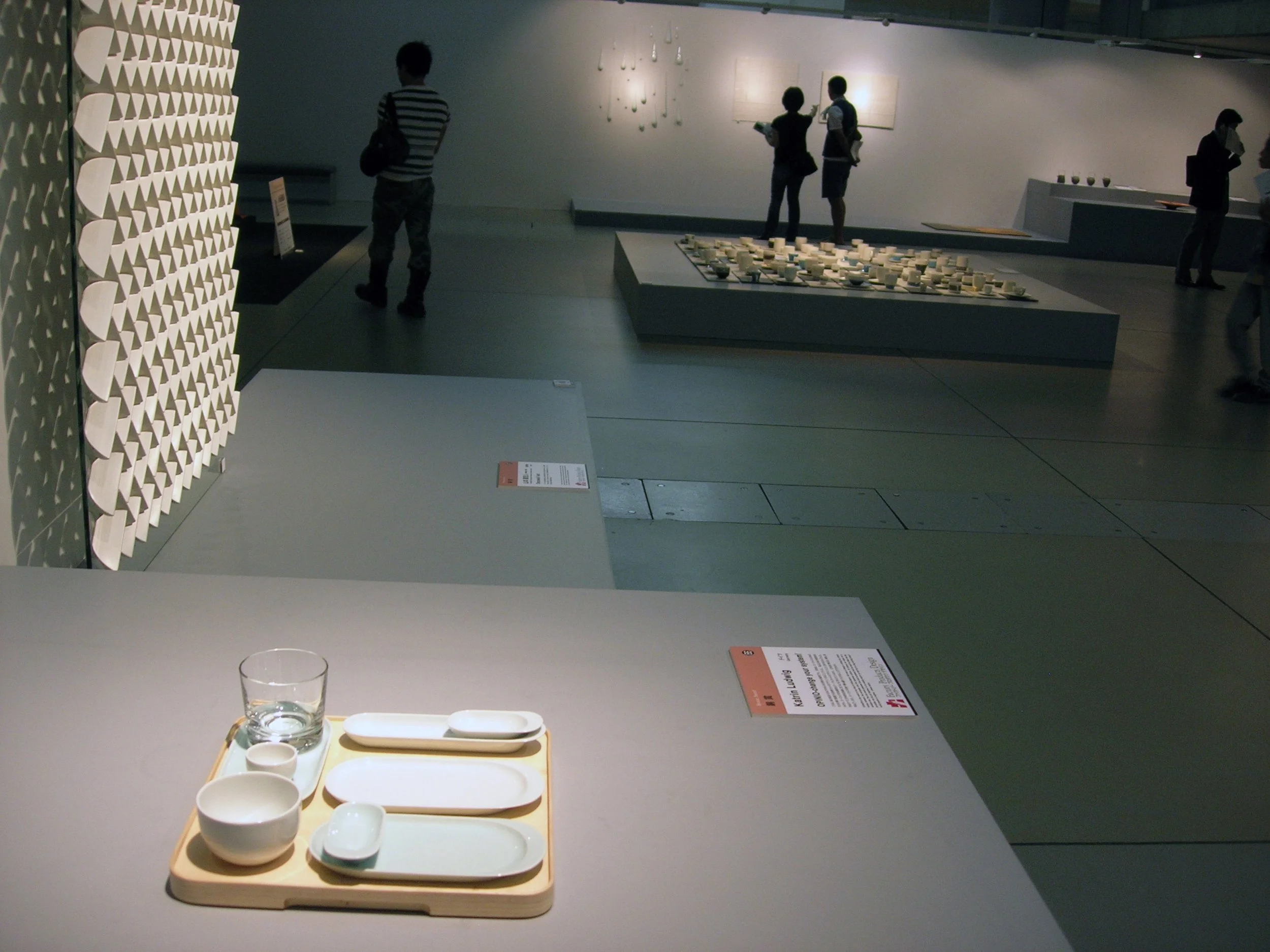
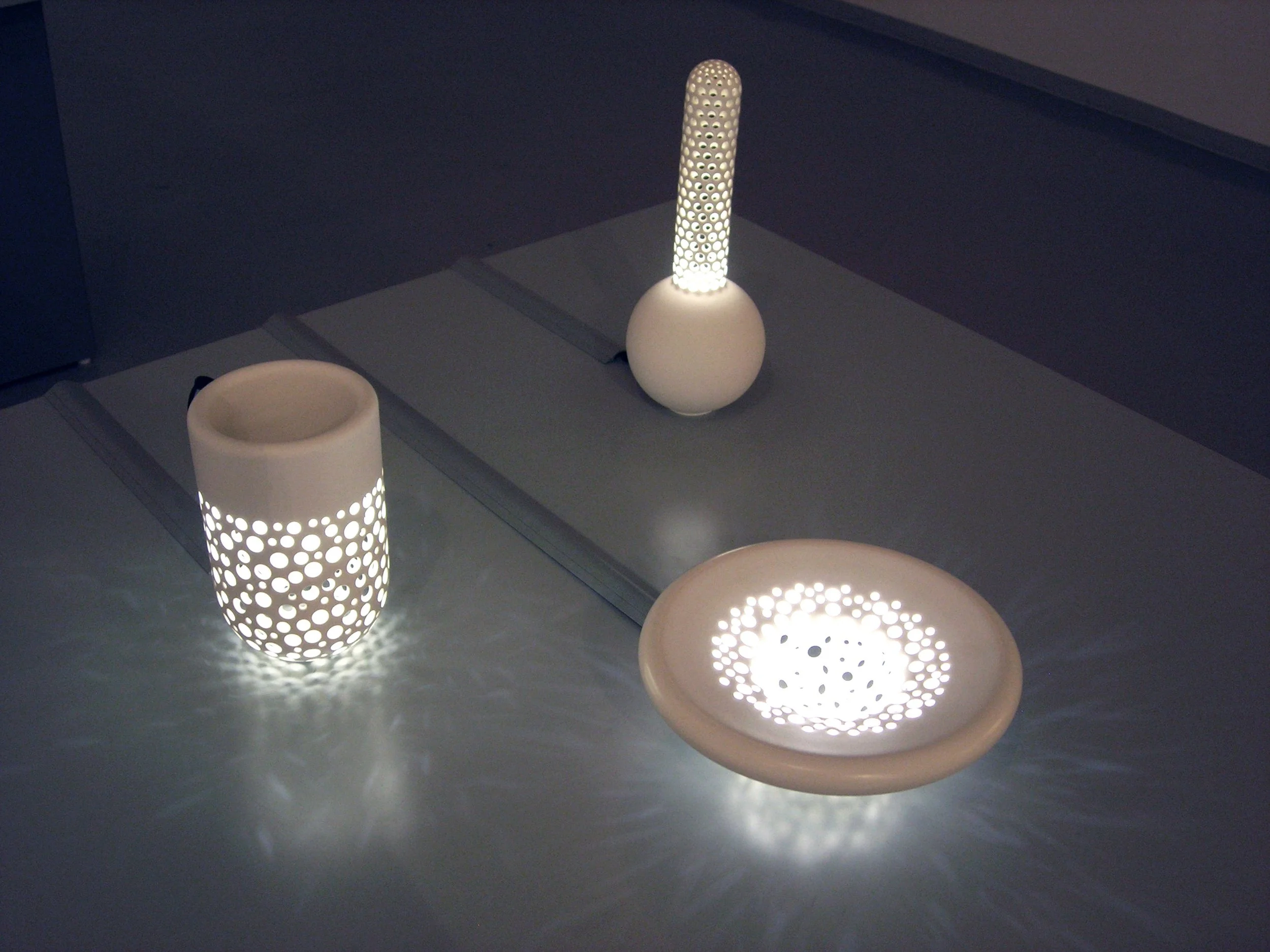
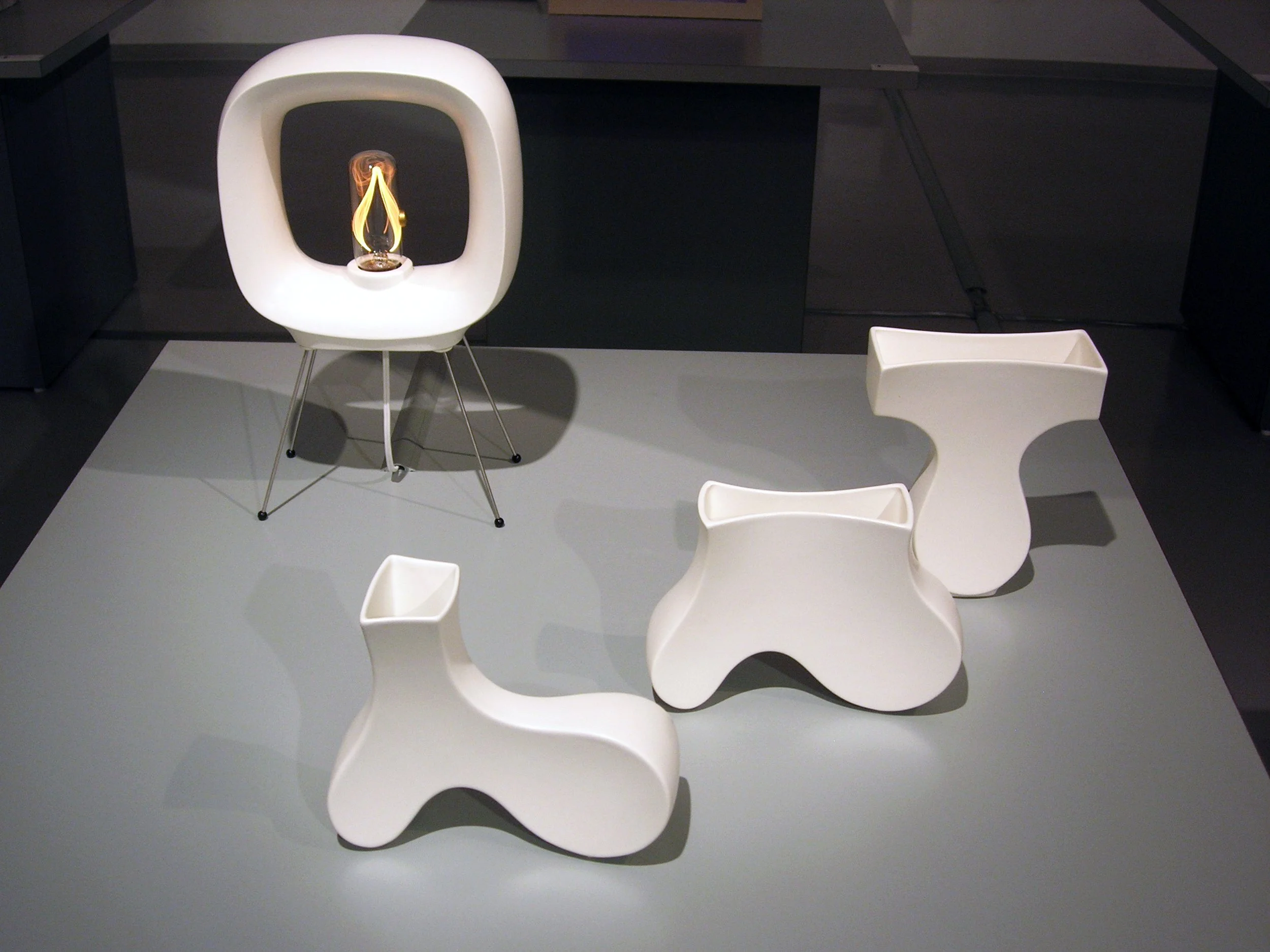
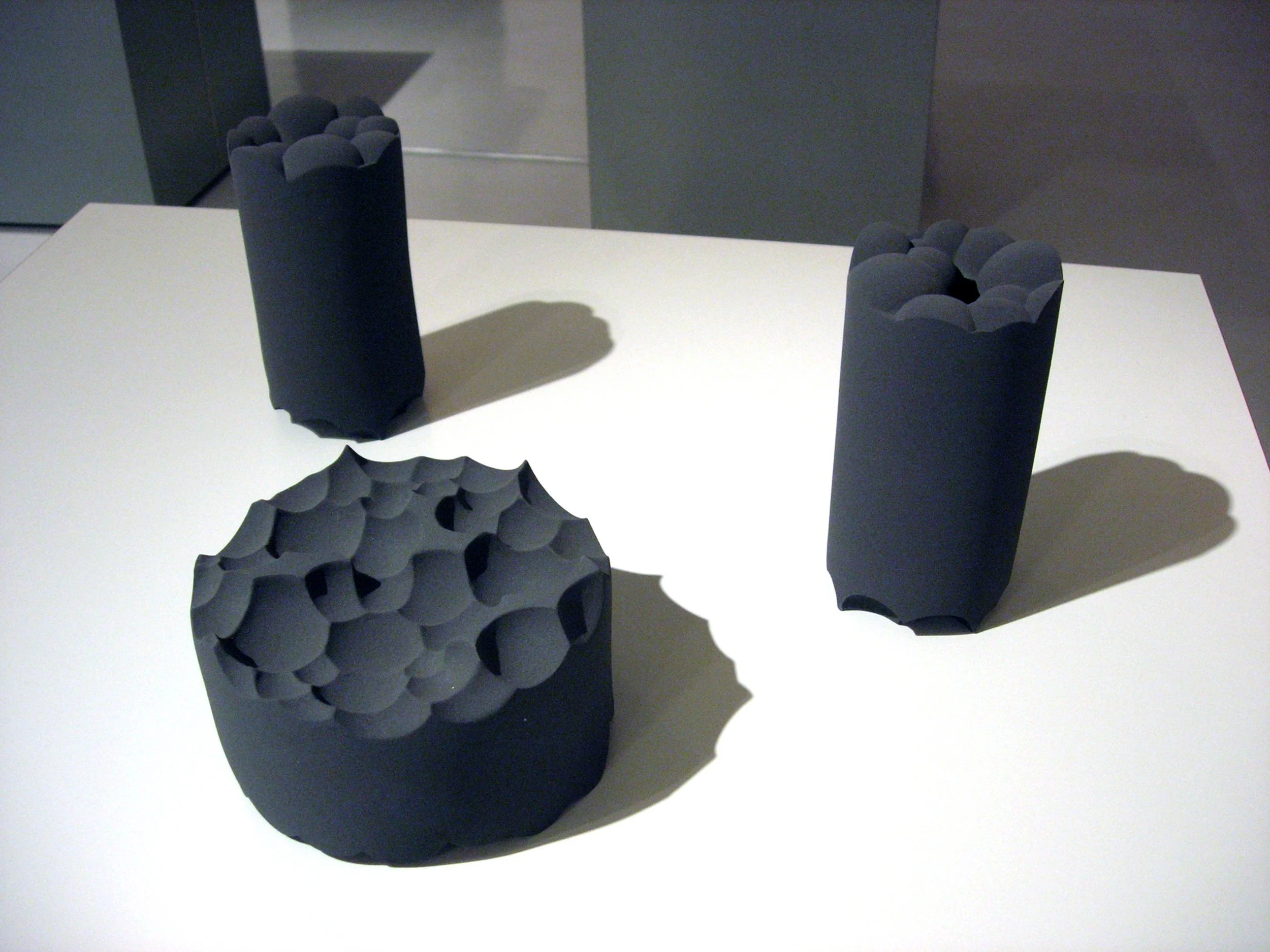
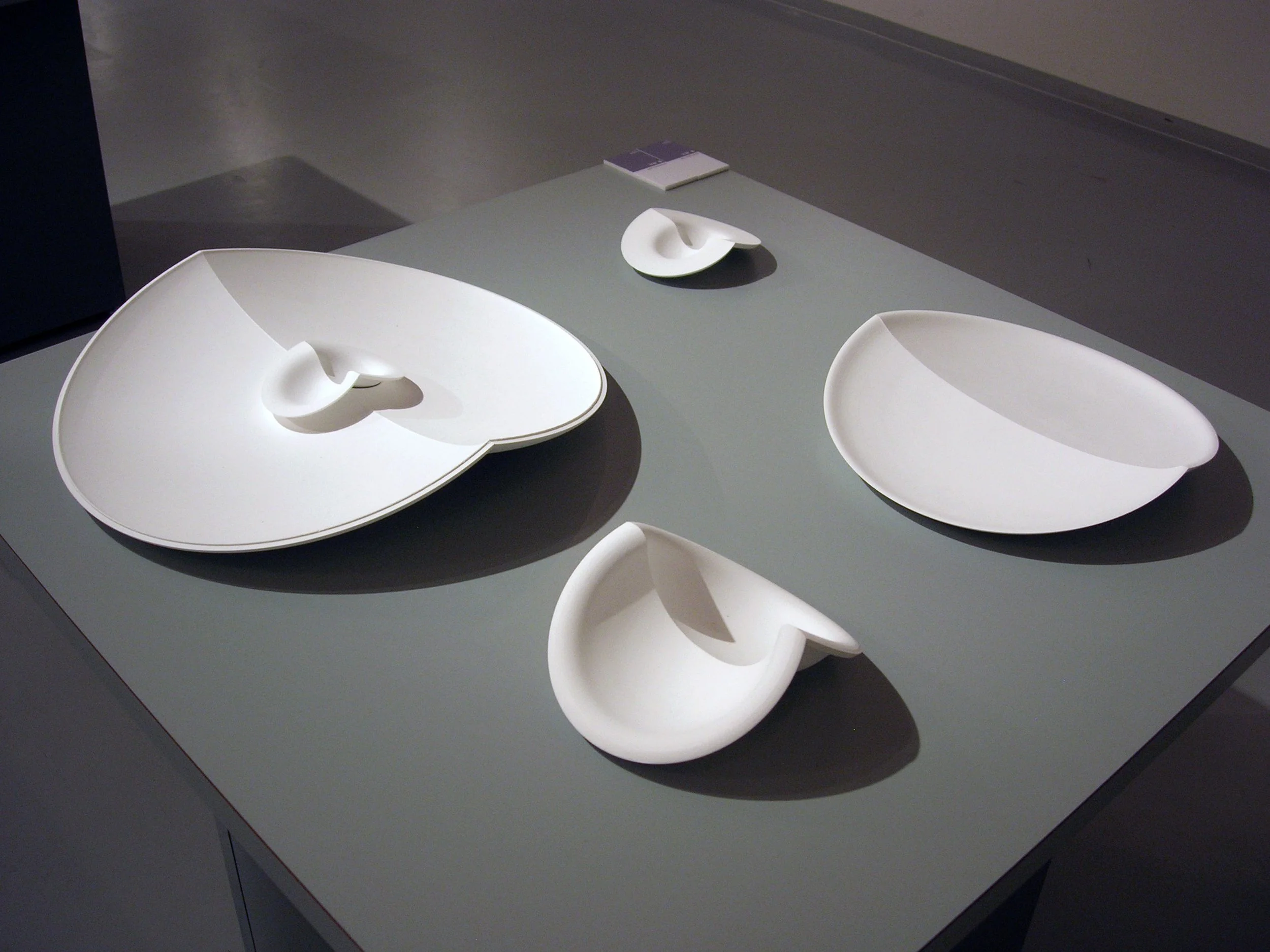
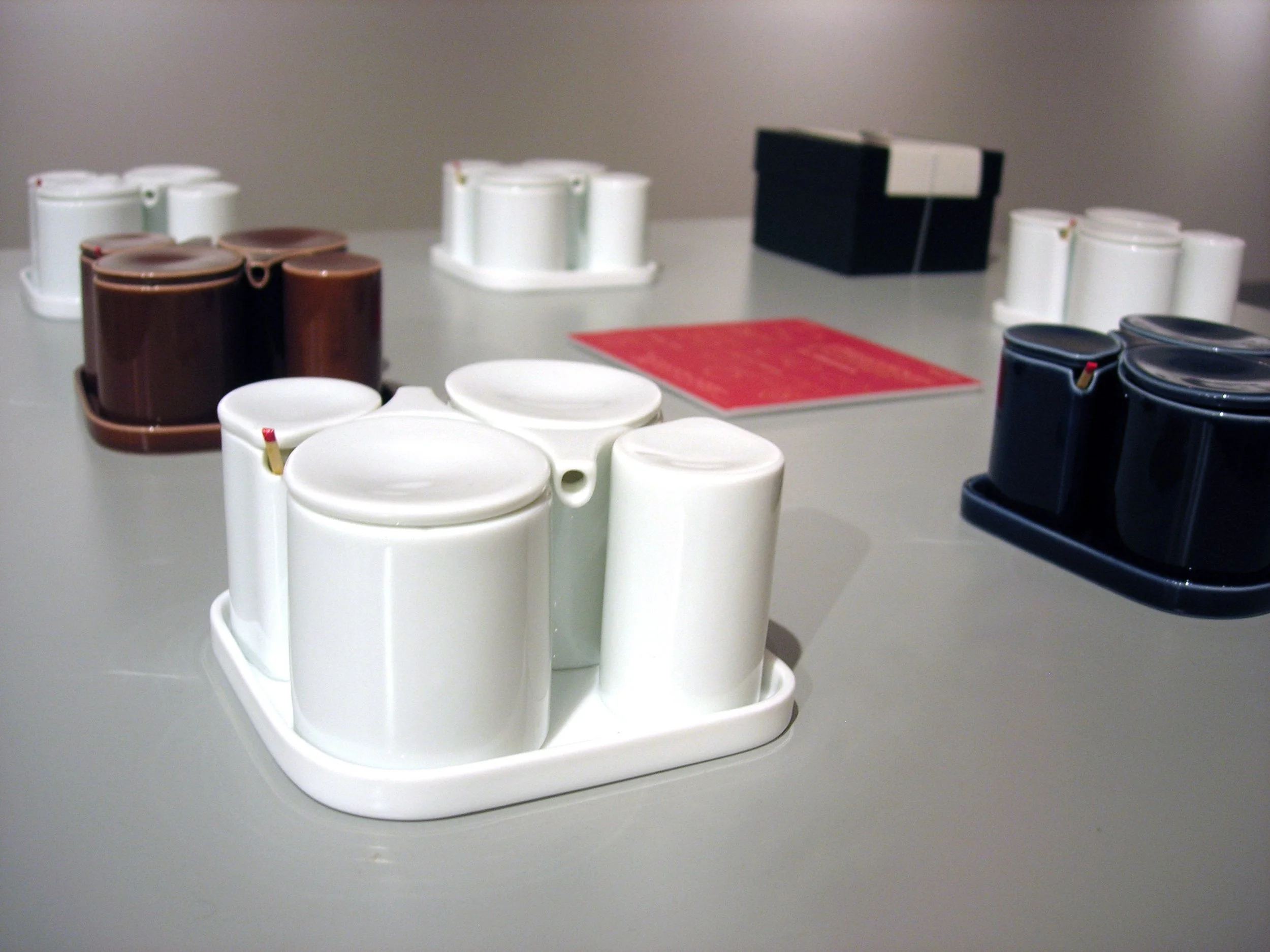
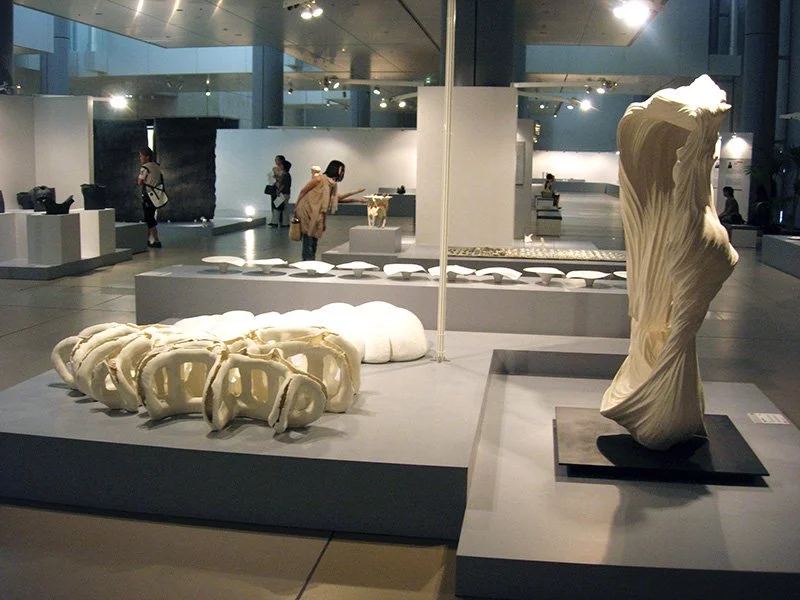
The museum hosts a range of exhibitions and conferences that foster new perspectives in contemporary ceramics. Its distinguished International Ceramics Competition Mino takes place every three years in Oribe Square, the museum’s largest exhibition hall.
The Museum of Modern Ceramic Art also includes studio facilities, intimate gallery spaces, a tea house, a restaurant and cafe, shops, and an observation tower, with nature trails offering expansive views across the surrounding landscape.
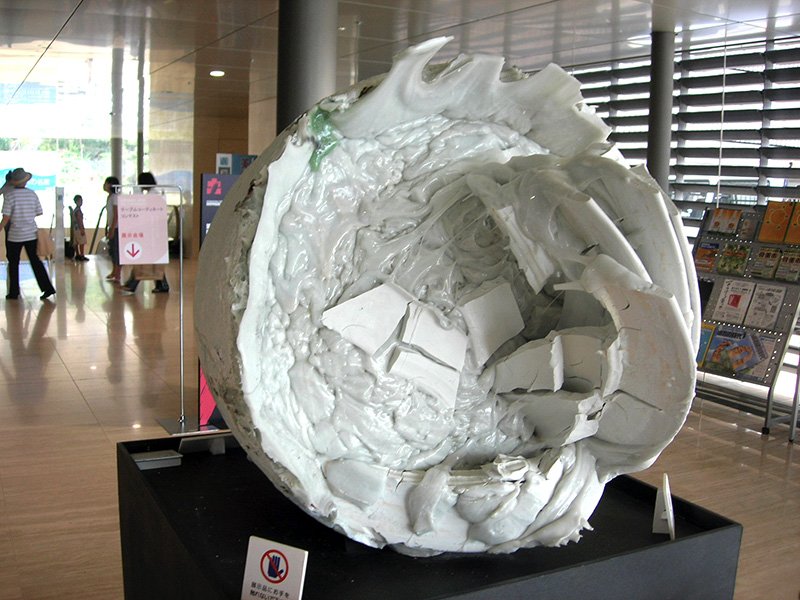
A ceramic sculpture in the museum entrance area
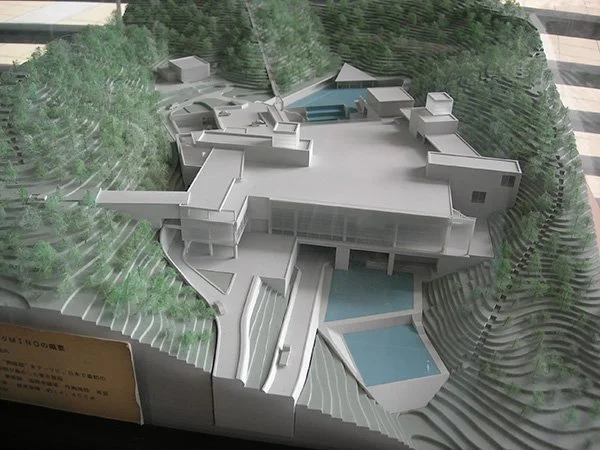
A scale model of Ceramics Park Mino illustrating its integration with the surrounding landscape
The Architecture
Sections of the building incorporate different coloured stone, chosen to mirror the spectrum of local clays, grounding the building materially and symbolically in its landscape. Some of the clays unique to the area are: Gairome Clay A fine white clay containing quartz, Kibushi Clay, a grey clay containing fossilised, silicified wood and Mogusa Clay, a red or black clay due to iron content with a coarse texture and small air pockets. Volcanic activity and rain in this mountainous terrain has altered the clay over thousands of years producing a unique clay specific to this region which also accounts for over 50% of Japan’s ceramic production.
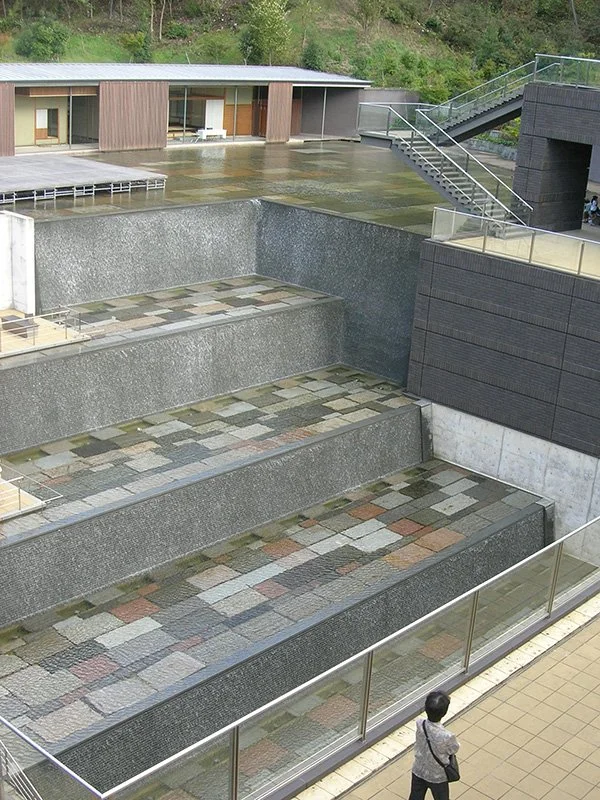
Stone slabs reflecting the diverse colours and textures of the local Mino clays
This dialogue with Mino’s history continues in the covered footbridge to the museum, where hundreds of ceramic shards are set into the concrete ceiling.
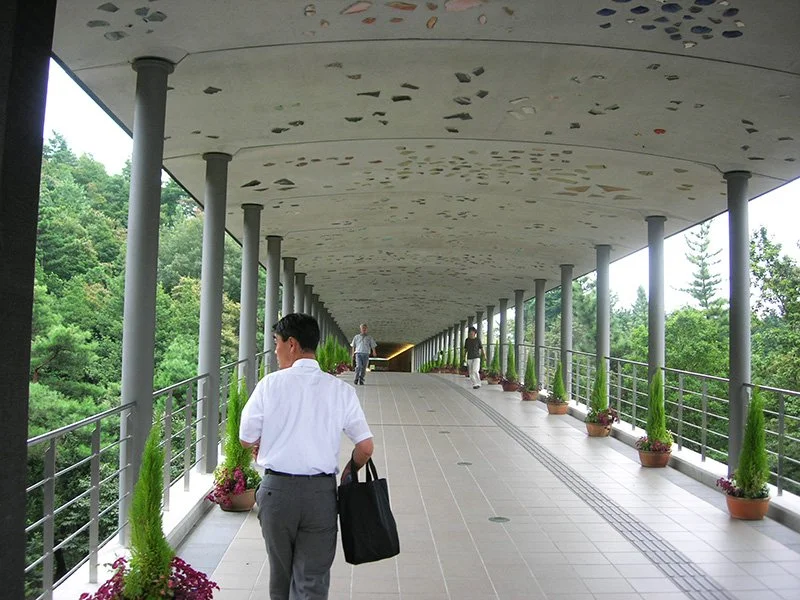
A short tunnel, also embedded with pottery fragments, links the footbridge to the main entrance. Visitors arrive in an open foyer that frames sweeping views across the expansive landscape beyond.
The ceramics park is arranged over four descending levels, built into the ground while remaining open on one side to the Cascade Plaza. Natural light floods the interiors through this exposed side, while sheets of water spill from broad pools across successive tiers, forming a living wall of sound and movement.
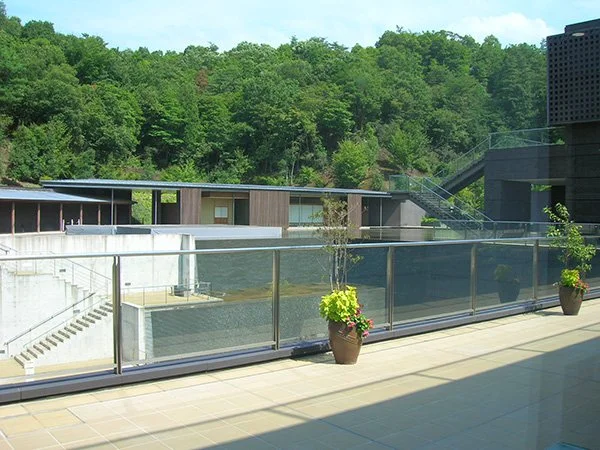
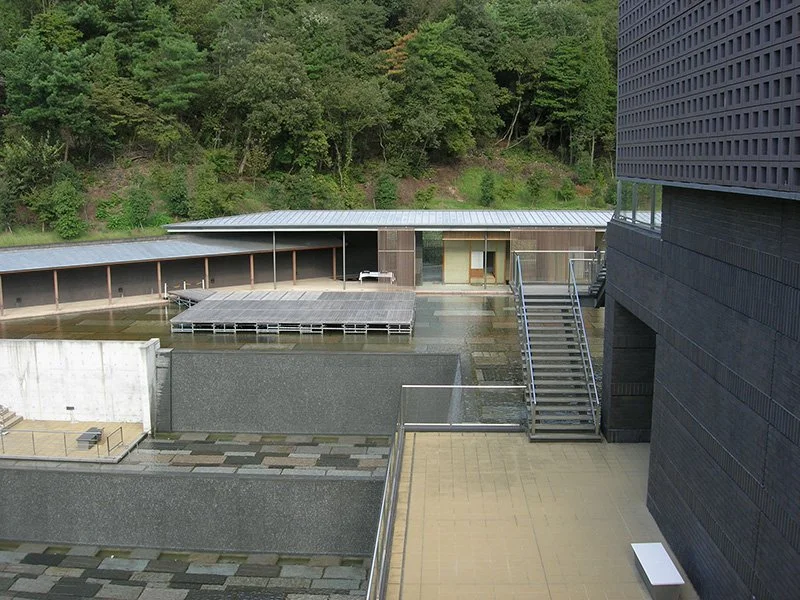
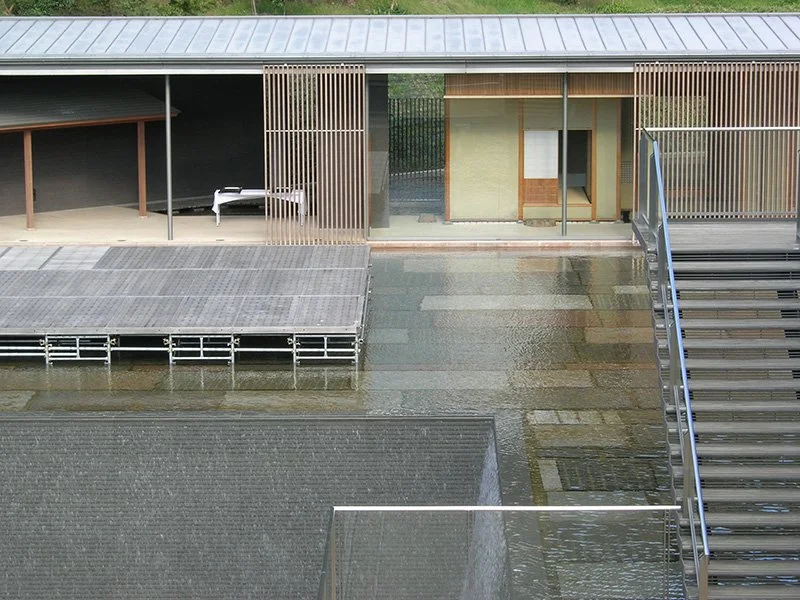
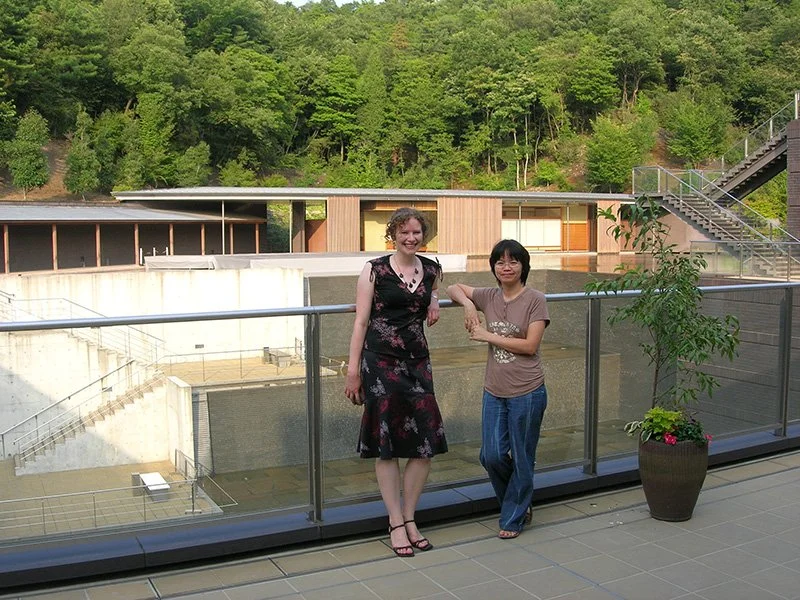
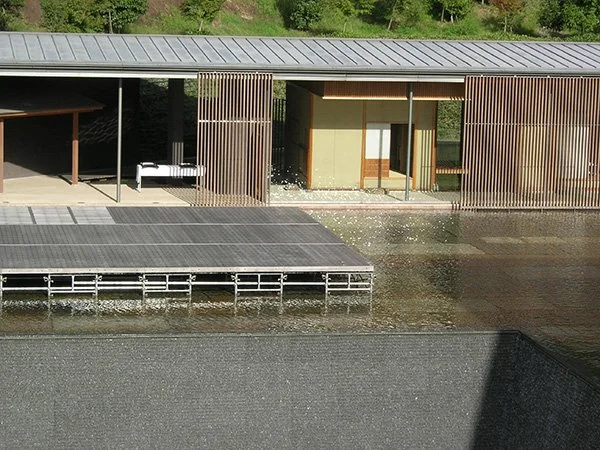
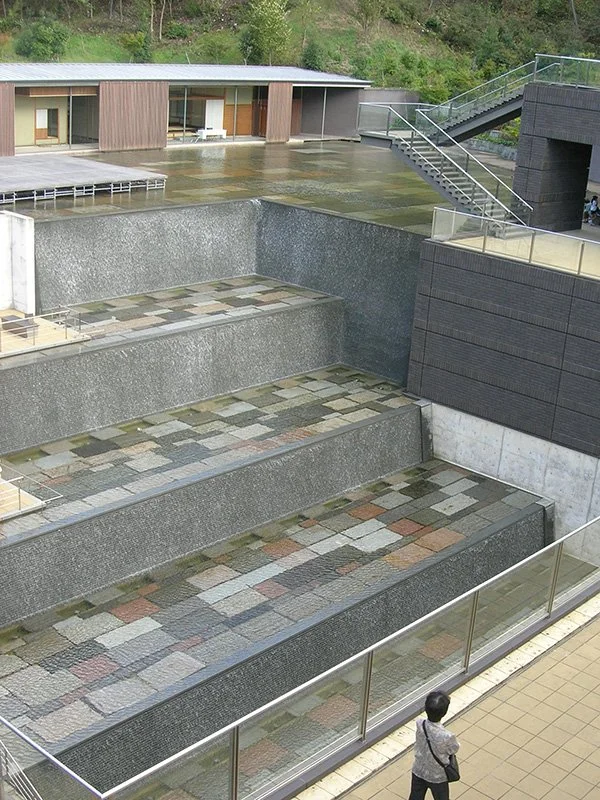
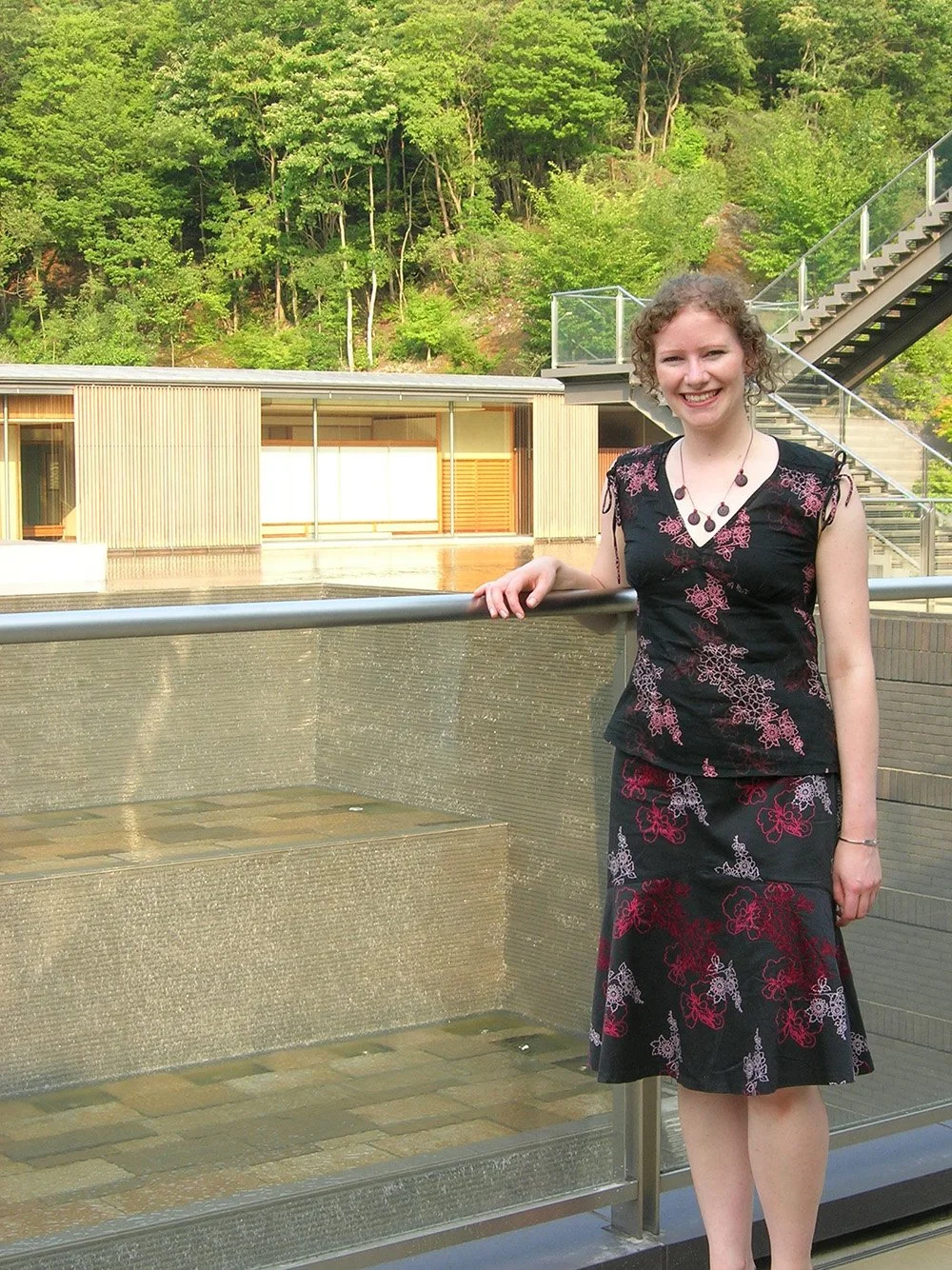
The cascade is visible from every floor — from the spacious ground-level café and Oribe Hall to exterior walkways that trace the building’s edge. These promenades, linked by staircases that appear to hover in space, overlook the flowing water below.
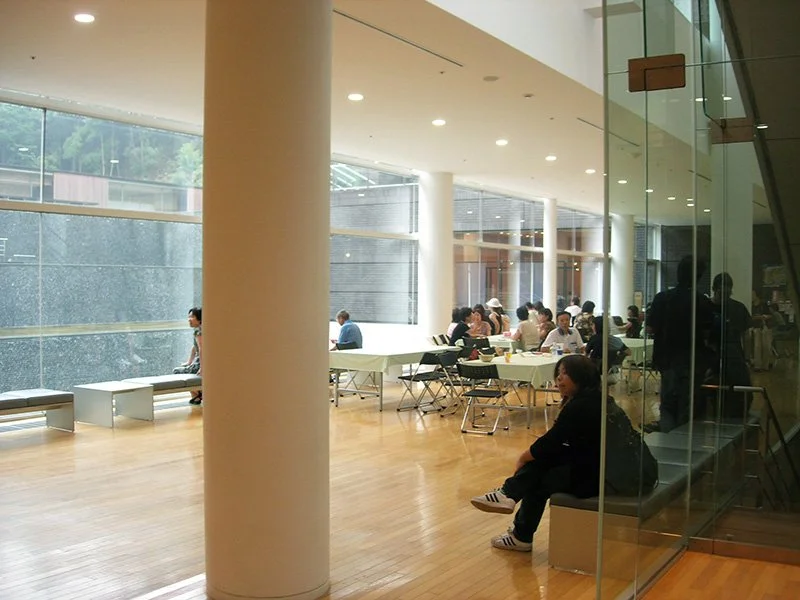
At the uppermost level, a restaurant near the entrance sits beside the source of the cascade. Below it, the shop and smaller gallery maintain a direct visual connection to the water feature at the building’s core. A modern interpretation of a traditional teahouse crowns the summit of the falling water, seeming almost to float.
In this building, Isozaki brings together tradition and contemporary design with remarkable clarity. The architecture engages the senses through its rich material palette — carefully chosen stone that echoes ceramic textures, alongside expressive uses of concrete and wood. These materials respond beautifully to shifting light, particularly in dialogue with the movement of water.
Teahouse, Ceramics Park Mino
The teahouse view leads to the surrounding landscape and the paths leading from the museum allow visitors to explore and experience the nature around the site. One of the paths leads to an architectural staircase and observation deck, which reminds me of a modern version of a ‘tori’, like the Japanese gateways found in front of shrines. From the top of the observation deck the whole museum and its grounds can be viewed. I was astonished to find architectural shapes and forms within the museum reflecting both the immediate and remoter surroundings, in broken fragments (like ceramics) aggregated together in a new ways. It was nice to experience all the harmonious links this building manages to create.
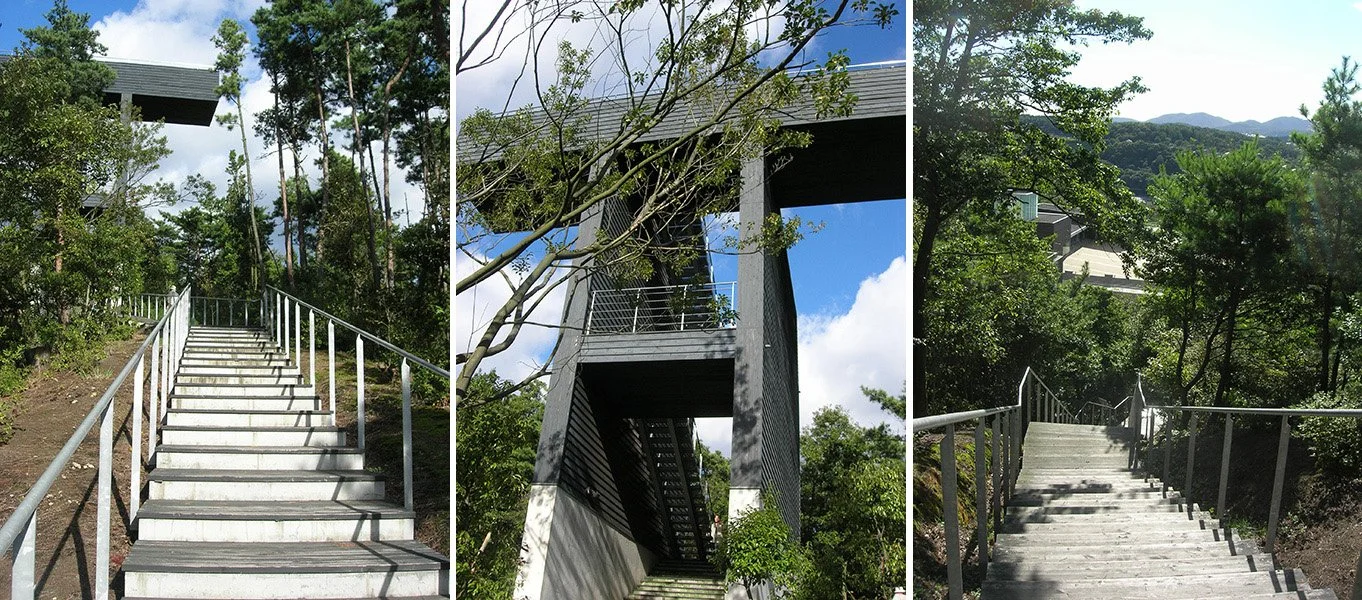
Observation deck, Ceramics Park Mino
View from the observation deck onto the Mino Ceramics Park
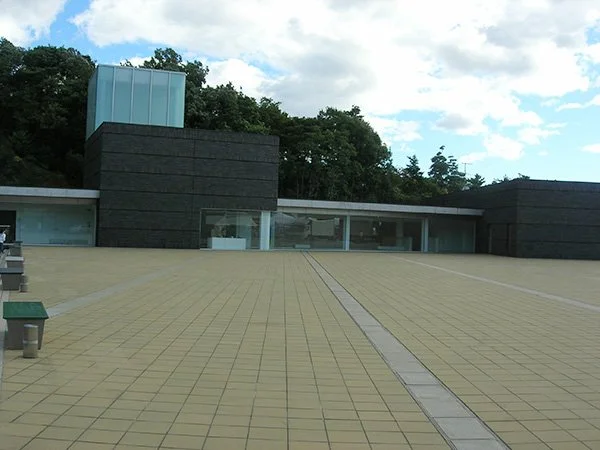
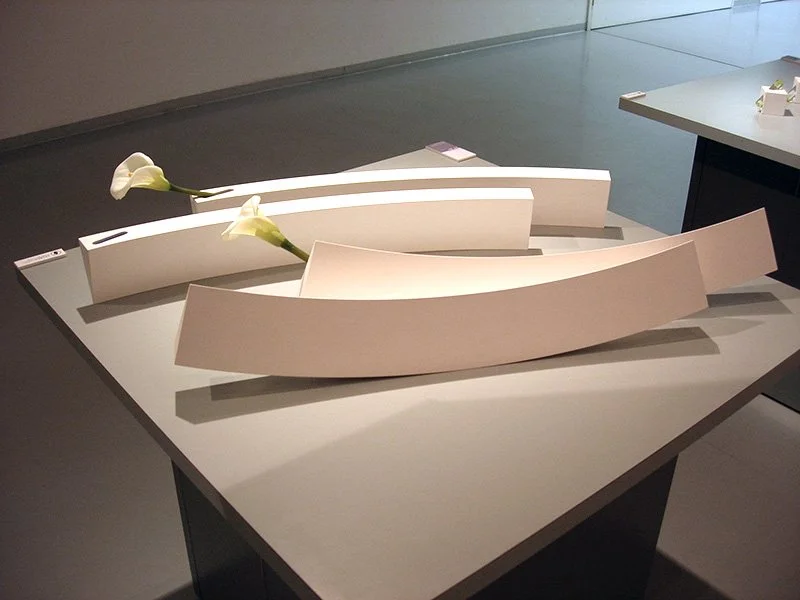
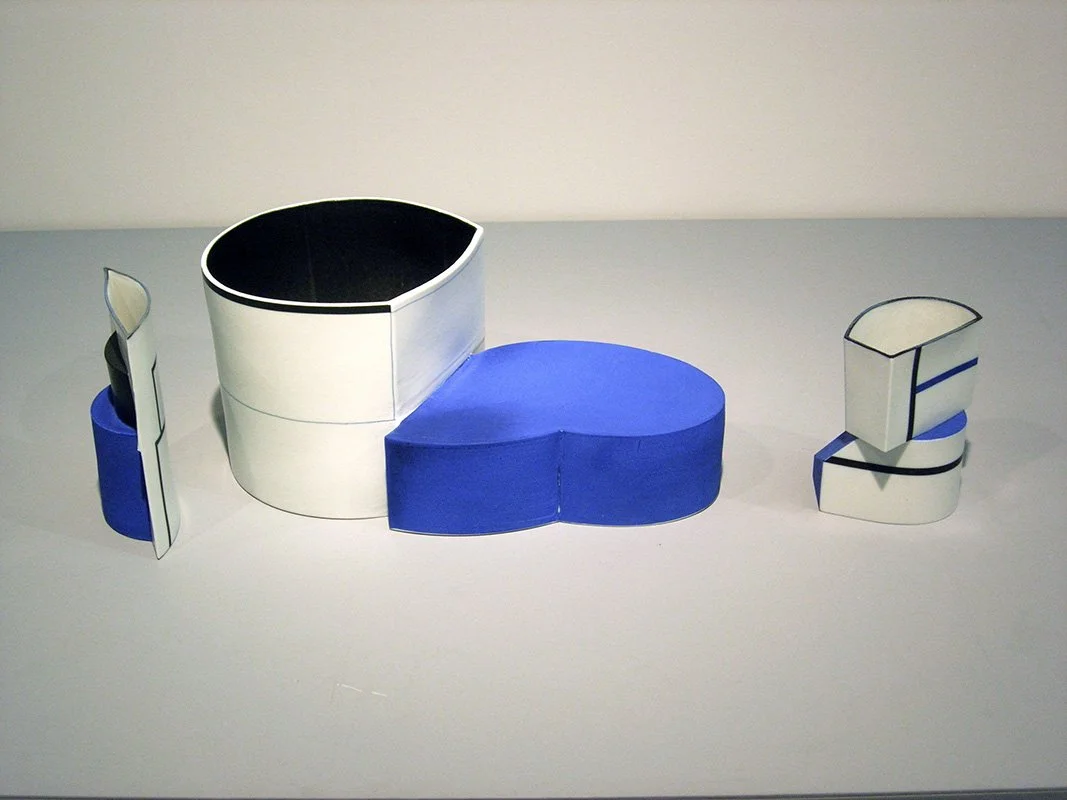
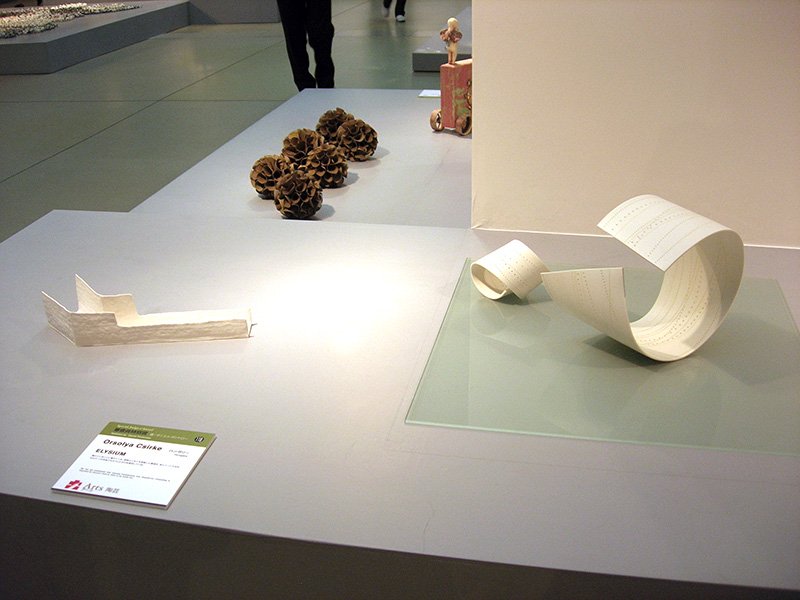
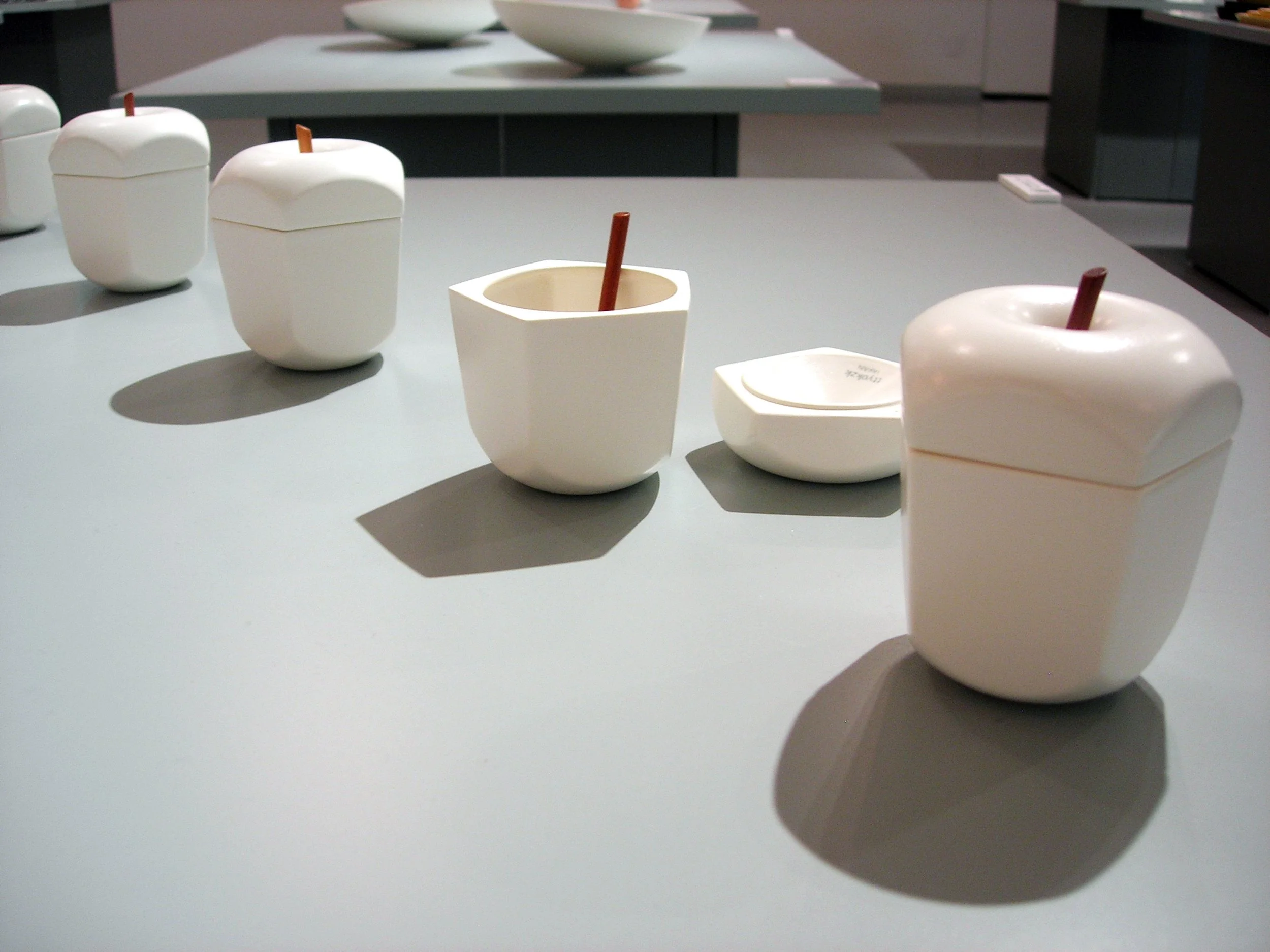
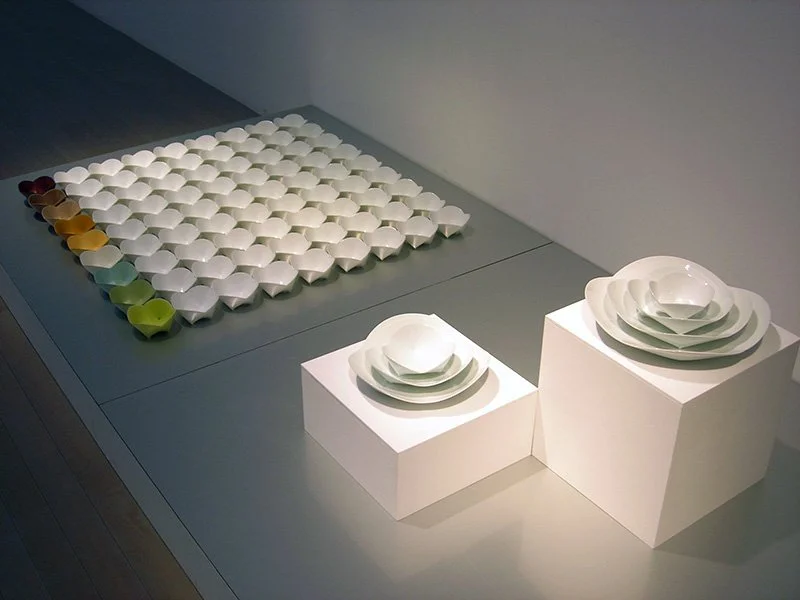
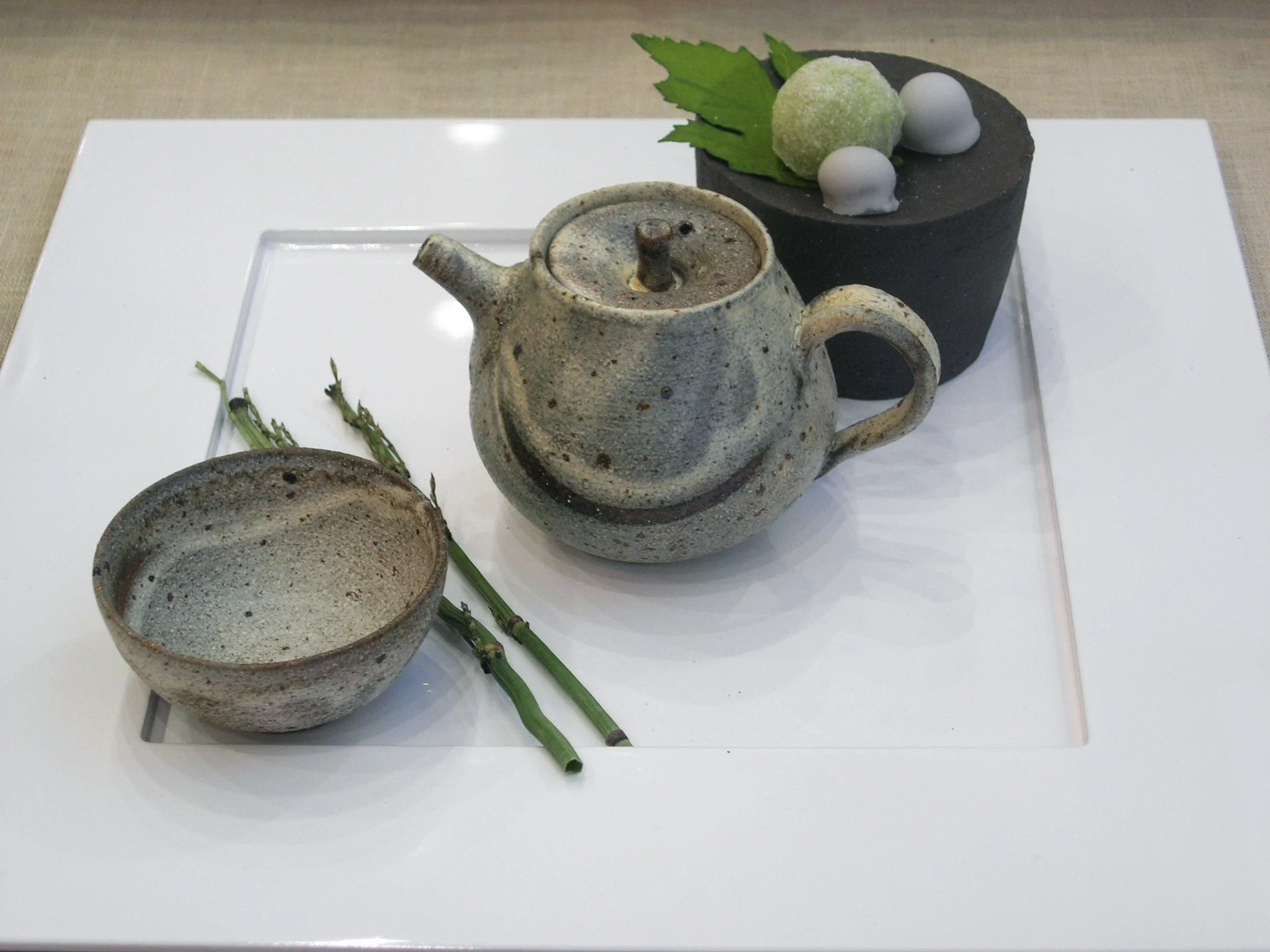
Here are a few more photos of the architecture,the 8th Mino Ceramics Competition Awards Ceremony and ceramics works exhibited in the museum.
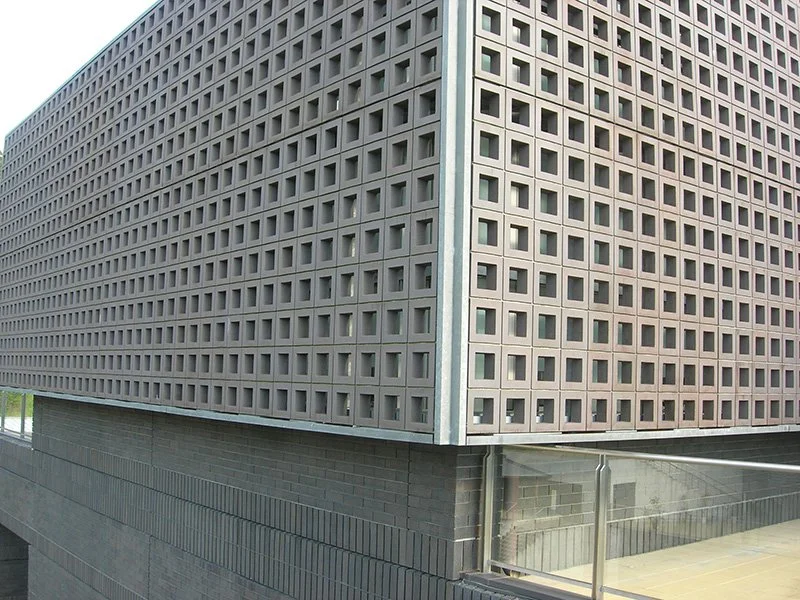
Mino Ceramics Park, Ceramic Education Centre
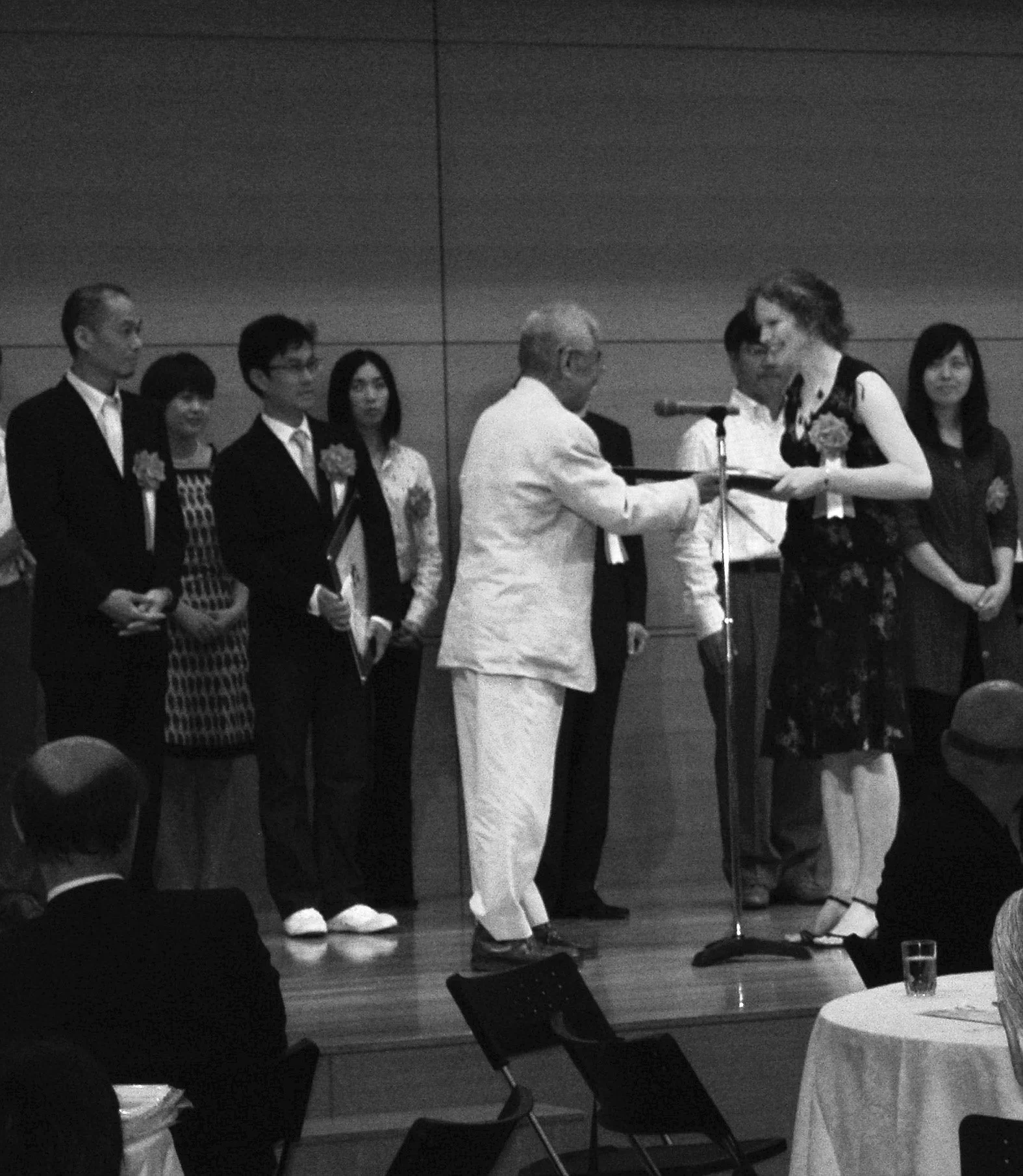
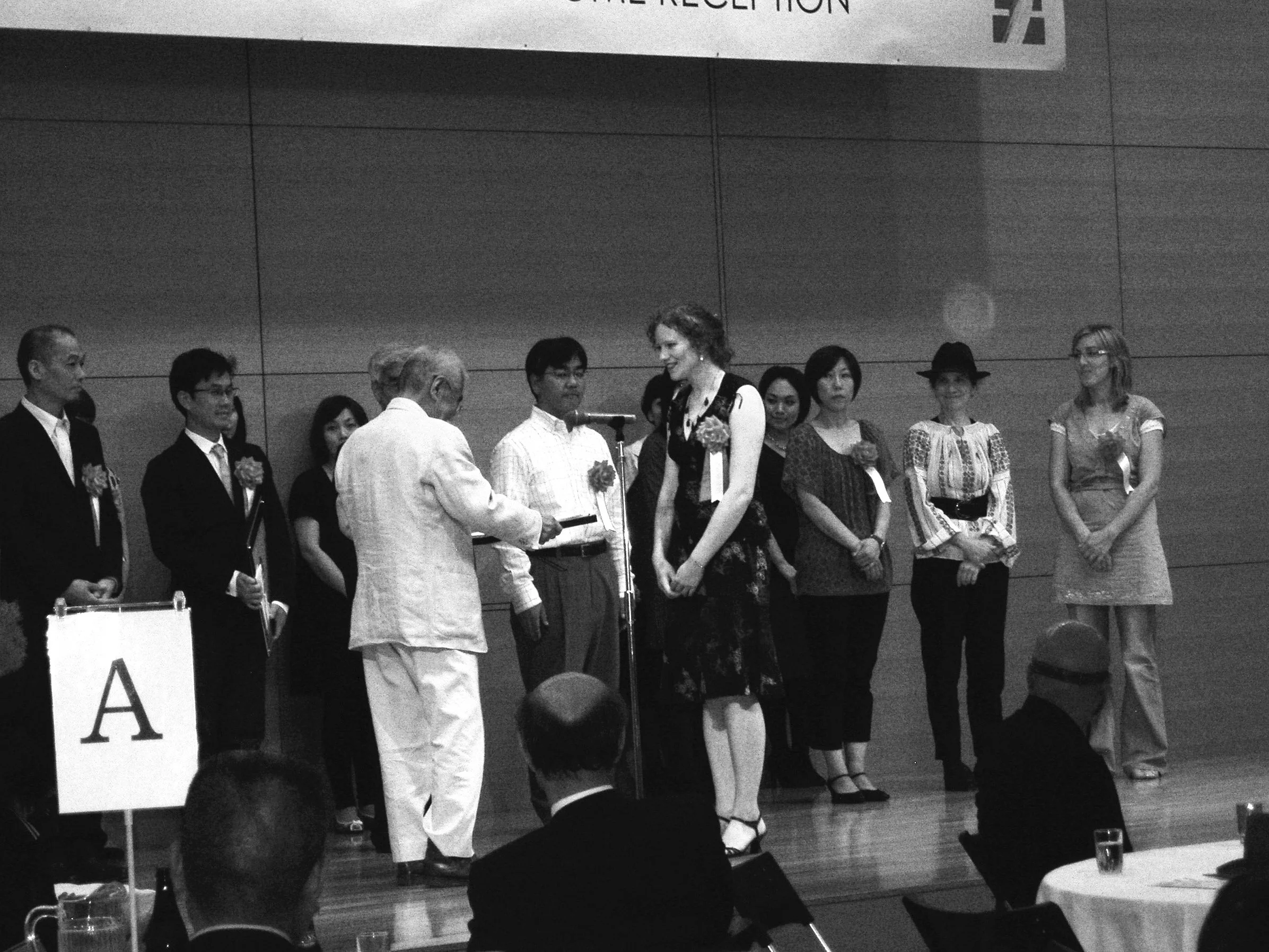
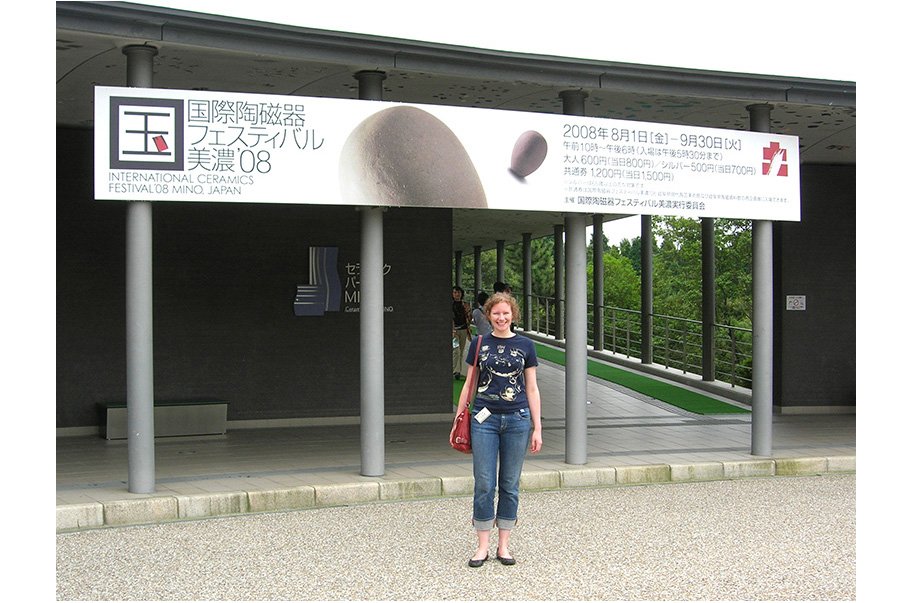
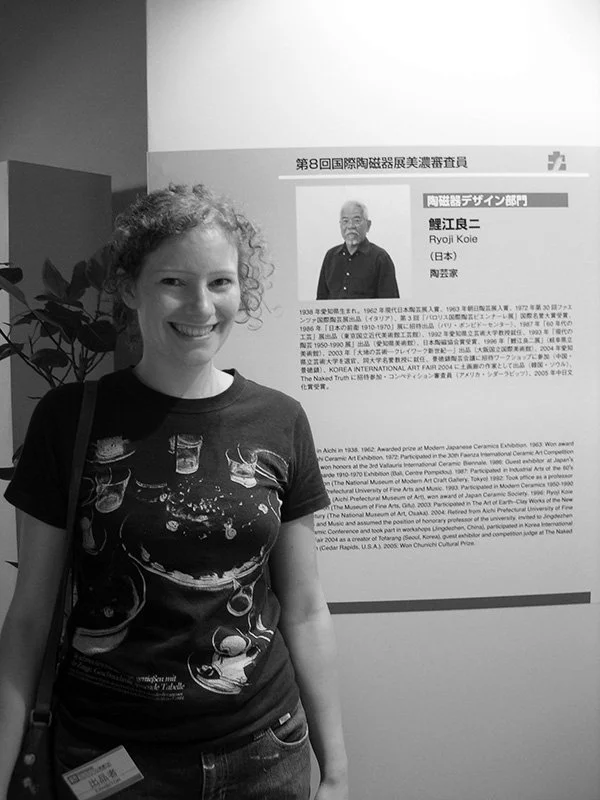
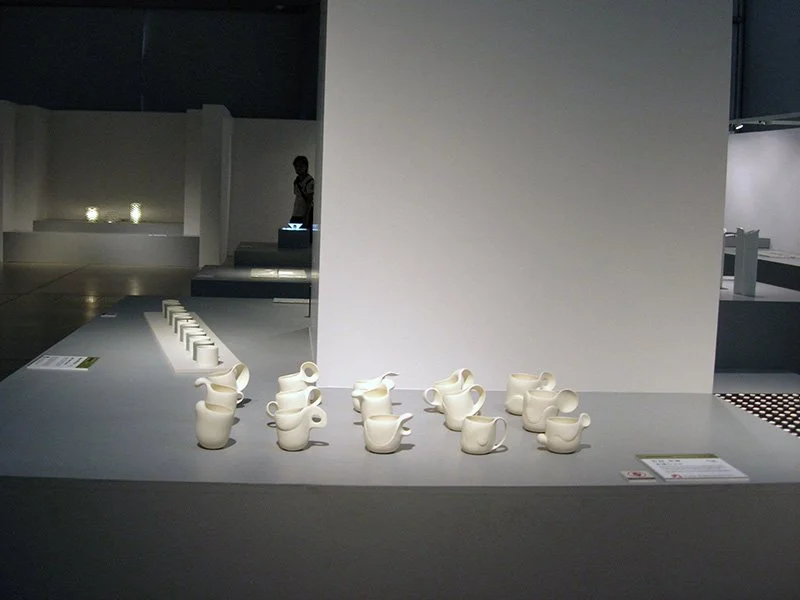
Talking Mugs, Yuri Takemura, Japan, 8th International Ceramics Competition Mino, Special Judges Award, selected by Piet Stockmans Light Catcher Series, Jo Woffinden, UK, 8th Internation Ceramics Competition Mino, Special Judges Award, selected by Ryoji Koie
#arataisozaki #museumofmodernceramicart #minoceramicspark #internationalceramicscompetitionmino #ceramicmuseseum #ceramicmuseumjapan #japanesearchitecture #minoceramics #arataisozakiarchitecture #landscapearchitecture #ceramicscompetition #contemporaryceramics #ceramicsexhibitionjapan #ceramicart #ceramicdesign